Oct 13 , 2026
Short answer: yes, you can genuinely improve kidney function, and no, it doesn't require some detox tea influencer sold you at 2 am. It mostly comes down to habits so boring they barely feel like "health advice" at all.
I say this with love, but nobody thinks about their kidneys. Ever. We obsess over abs, we panic about cholesterol, we've all googled "is my heart okay" at least once after too much coffee. Kidneys? Total afterthought. Which is kind of unfair, because these two fist-sized organs are filtering your entire blood supply, multiple times a day, without a single thank-you note. That's the whole idea behind real kidney care; it's not glamorous, it's just consistent.
Here's what makes kidneys sneaky: they don't really announce when something's wrong. There's no chest pain moment, no dramatic gasp. They just quietly absorb more stress than they should, for way longer than they should, until a routine blood test comes back looking off and suddenly you're googling nephrologists at midnight.
There's actually decent research behind this. A long-running Italian study- the Gubbio study- tracking over 3,000 adults across 15 years, found that people with lower physical activity, more sodium in their diet, less potassium, and higher protein intake saw a steeper drop in kidney performance over time. Nothing dramatic, no single villain. Just years of small choices stacking up.
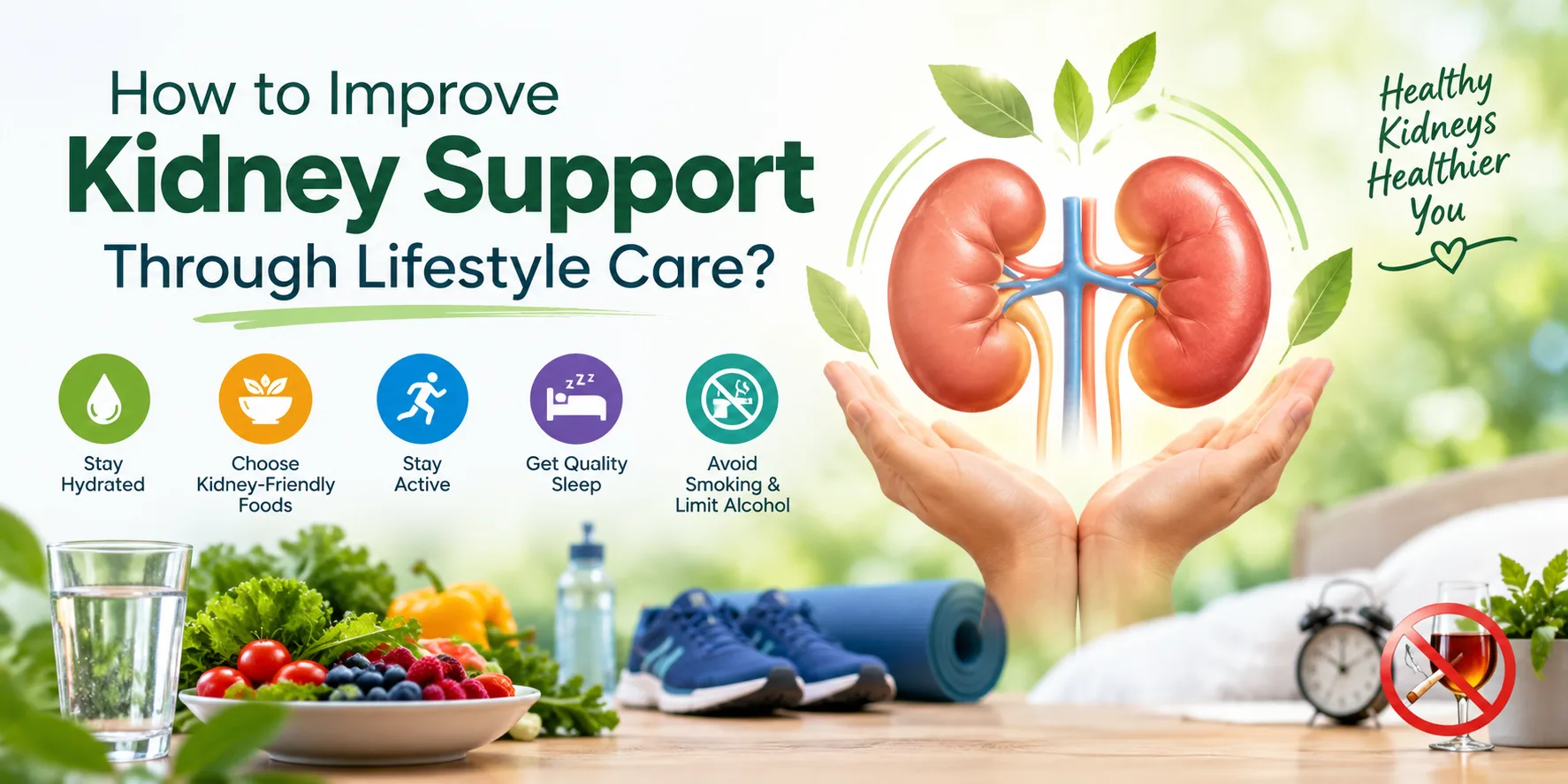
So if you're trying to figure out actual lifestyle care for kidneys, forget the supplements aisle. Start here instead:
If you're exploring natural kidney treatment, start with sustainable habits, appropriate medical monitoring, and advice that fits your health needs. Natural approaches aren't automatically safe or effective, and they shouldn't replace prescribed treatment.
📩 Ask a Kidney Expert (Free 10-Min Consultation)
If kidney trouble had an origin story, uncontrolled blood pressure and blood sugar would be it. Both quietly damage the tiny blood vessels inside the kidneys over years, which is why doctors keep hammering on renal function whenever those two numbers come up at your check-up. Honestly, keeping blood pressure and blood sugar in a healthy range is one of the most important things many people can do to protect kidney health long-term; more impactful than any fancy diet trend.
And if you're already managing something more serious- medication, a nephrologist, regular labs- none of this replaces that. Lifestyle habits aren't a substitute for real kidney disease help; they're just the stuff that supports your overall care.
|
What you do |
How your kidneys probably feel about it |
|
Drinking water throughout the day |
"Oh nice, someone remembered us." |
|
Popping ibuprofen like it's candy |
"Cool, more unpaid overtime, thanks." |
|
A brisk evening walk |
"Circulation's great, we're thriving actually." |
|
Salty snacks at midnight, every night |
"Sodium's climbing. Blood pressure's climbing. We'd like to speak to a manager." |
|
Actually going to your annual check-up |
"Wait, someone's checking on us? Emotional." |
|
Chain-smoking for a decade |
"We'll just sit here and slowly deteriorate, no big deal." |
Nothing here needs a whole personality transplant.
That's really it. A little kidney support, delivered through boring, repeatable habits, tends to beat any sudden 30-day health overhaul. If you're considering Ayurvedic treatment for kidneys, discuss it with your healthcare provider and continue any prescribed medicines, kidney tests, and specialist appointments.
📩 Ask a Kidney Expert (Free 10-Min Consultation)
A: In some cases, lifestyle changes can improve kidney health or help slow further damage. The results depend on the underlying cause and stage of kidney disease.
A: Fluid needs vary, so pale yellow urine can be a rough guide, but people with certain kidney or heart conditions may need fluid limits.
A: Yes, regular physical activity can help manage blood pressure and blood sugar, supporting your kidneys over time.
A: Occasional use may be appropriate for many people, but frequent use of certain painkillers can harm the kidneys, especially with existing kidney disease.
A: Often, there are no obvious symptoms early on, which is why routine blood and urine tests matter.
Disclaimer: This article is meant for general information only, not medical advice. Kidney health can vary a lot from person to person, so please talk to a qualified doctor before making any real changes to your diet, exercise routine, or medication.
