Apr 09 , 2026
Alright, let's talk about something that sounds like a plot point from a medieval torture movie but is actually one of the coolest ways to get your body back on track: sticking tiny needles into yourself.
Wait, don’t run away! I promise it’s not as scary as it sounds. If you’ve ever dealt with a back that feels like a coiled spring or a neck that’s stuck in a permanent "I’m looking at my phone" tilt, you’ve probably heard people whispering about needle therapy. Whether it's called acupuncture or dry needling, we’re diving into why people willingly pay to become human pincushions, and why you might actually want to be one of them.
Have any renal issues? Fill in the details and get an expert advice.
📞 Get a Kidney Health Consultation – Call Now!
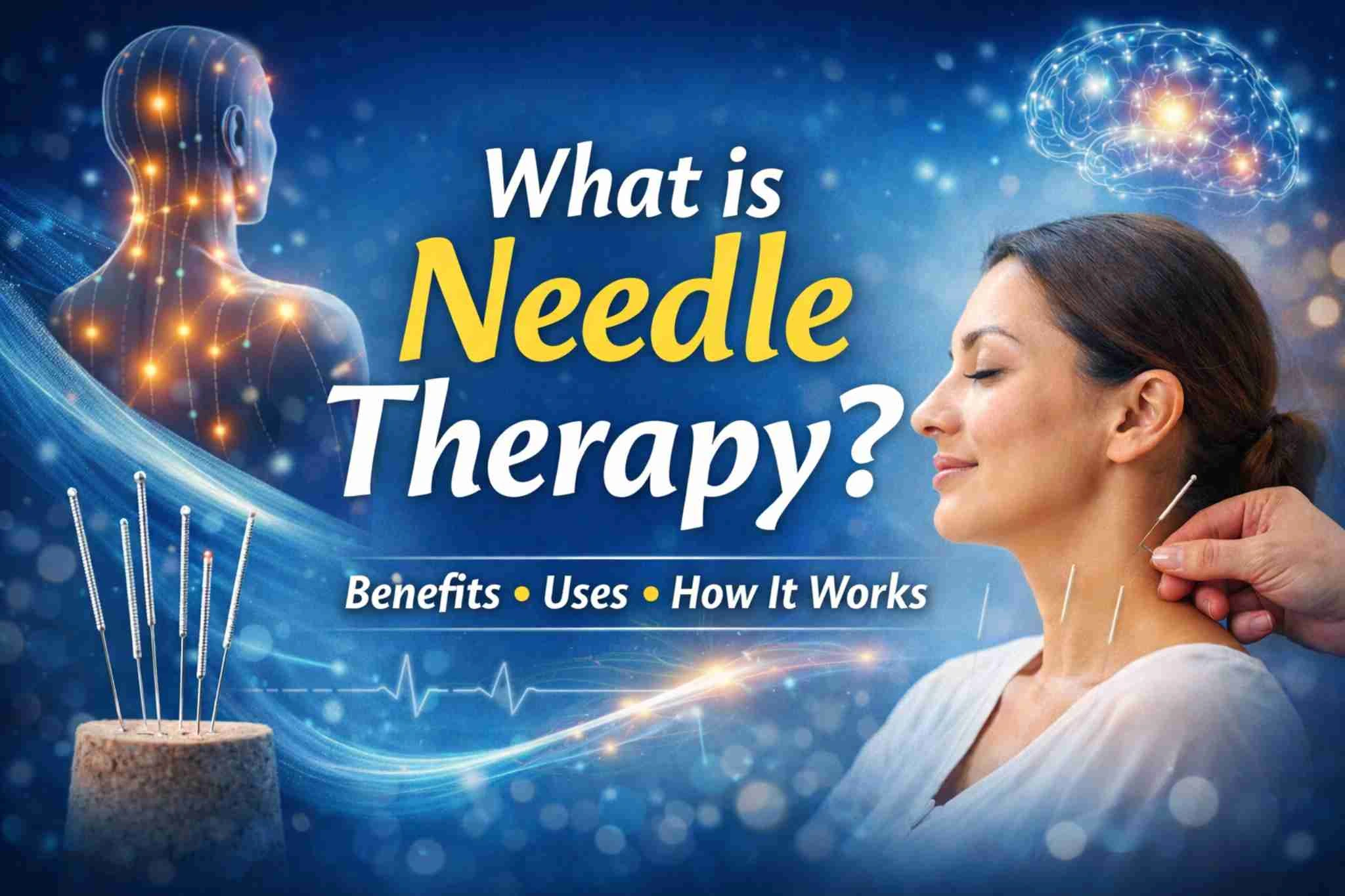
In the simplest terms possible, needle therapy is the practice of using very thin, solid needles to stimulate specific points on your body. I can tell what you’re thinking: "Stimulate" is a much more polite way of saying "poke"… but, just bear with me when I say there are actually two main styles of needling available to you.
First up, we’ve got acupuncture; the OG of needle therapy, straight out of Traditional Chinese Medicine. The whole idea here is to get your Qi (aka your body’s energy Wi-Fi) flowing smoothly again by poking very specific points. Think of it like rebooting your system… but with tiny needles instead of turning it off and on again.
Then comes dry needling, the more “modern gym bro” cousin. This one doesn’t care about energy flow or ancient wisdom; it goes straight for tight, cranky muscles and says, “Relax, bro.” The needles are used to poke those stubborn knots and trigger points so they finally let go. No medicine involved; just a bit of strategic stabbing to convince your muscles to behave.
So yeah, both involve needles… but one’s balancing your inner vibes, and the other’s basically telling your muscles to chill out already.
Have any renal issues? Fill in the details and get an expert advice.
📞 Get a Kidney Health Consultation – Call Now!
So, how does poking a hole in your leg make your shoulder stop hurting? It feels a bit like magic, but it’s actually just your body being incredibly dramatic.
When a needle enters your skin, your brain goes into a mini-panic mode. The message states, "Sorry to interrupt, but an intrusion was detected inside the perimeter," as there is a wounding of the body; however, due to the injury, the body has the capacity for endorphins to be created. Endorphins are naturally occurring substances that relieve pain from injuries and create an extremely pleasurable sensation (i.e., create a "runner's high" without actually running).
When an injury occurs, your brain signals your heart to begin supplying blood to that part of your body. This blood contains all of the materials (oxygen & nutrients) that are necessary for repairing and healing your body.
📞 Get a Kidney Health Consultation – Call Now!
Sometimes, your muscle fibers get all tangled up into what we call "trigger points" or knots. These knots are grumpy. They stay tight, they cut off their own blood supply, and they refer pain to other parts of your body.
When a needle hits one of these knots, it causes a local twitch response. It’s a weird sensation, like a tiny internal jump-start. This twitch forces the muscle to relax and lengthen, resulting in relaxation and pain relief.
Aside from the bragging rights of being "tough," there are some genuine, life-changing perks:
Muscle Relaxation: It gets into deep tissues that a foam roller or a massage therapist’s thumb just can’t reach.
Improved Range of Motion: Relaxed muscles allow for a better range of motion.
Reduced Inflammation: It helps clear out the waste buildup in the muscles by keeping a check on inflammation.
Headache Relief: It’s a godsend for tension headaches that feel like a vice grip on your skull.
Stress Reduction: Even though you’re being poked, the endorphin release is incredibly calming. Many people actually fall asleep at the table. Yes, really.
📞 Get a Kidney Health Consultation – Call Now!
I won't pretend this is an easy process with lots of positives; however, you do benefit from this lifestyle change. The first benefit is that you show up feeling more energetic, more liberated in your movements, and will more than likely achieve a decrease in your chronic pain levels.
Soreness: Your body may feel stiffer; however, this feeling fades within 24 to 48 hours.
Bruising: Sometimes a tiny blood vessel gets in the way. You might end up with a small bruise that makes you look like you had a very specific, very small fight.
Fatigue: Some people feel "needle drunk," just a bit spacey or tired after a session. It’s your body’s way of saying, "Hey, I’m healing here, give me a nap."
Fainting: Very rare, but if you’re terrified of needles, your blood pressure might take a quick dip. Just tell your therapist if you’re a fainter!
📞 Get a Kidney Health Consultation – Call Now!
The short answer? Yes. The long answer? Yes, but make sure you’re going to a pro.
When performed by a licensed professional or at a reputed hospital like Karma Ayurveda USA, needle therapy is incredibly safe. The use of sterile, single-use needles ensures that there is zero risk for infections.
Whether it’s lower back issues, fibromyalgia, or nagging sports injuries, needle therapy is backed by a mountain of modern research. It doesn’t just mask the pain like a pill; it addresses the physical dysfunction causing the pain in the first place. It’s not a "one and done" miracle, though. Most people need a few sessions to see the full "wow" effect.
Have any renal issues? Fill in the details and get an expert advice.
📞 Get a Kidney Health Consultation – Call Now!
If you’re the type of person who needs to know exactly what’s happening so you don’t freak out, here is the play-by-play of a typical session:
You'll feel pressure on your muscle when your therapist searches for the active knot in your muscle. The therapist will typically find the knot because you will likely make a face and say, "That's it."
Your therapist is going to use alcohol to disinfect the area first, which is for your own safety and is just a routine part of the procedure.
The next thing that your therapist does is to put the needle into your muscle by putting a small plastic tube over the skin where he/she plans to inject you, and then taps the plastic tube to put the needle through that skin quickly.
Then, the therapist will move the needle slightly to locate the "active muscle trigger point," which is the fun part!
When the therapist finds the trigger point, your muscle will twitch involuntarily. This will feel like a cramp and may also be dull.
The needle is removed at that point without usually bleeding at all.
After the needle has been removed, you will probably be asked by your therapist to stretch and drink a little water.
And that’s it! You walk out feeling a little tender but significantly more "loosey-goosey" than when you walked in.
Have any renal issues? Fill in the details and get an expert advice.
📞 Get a Kidney Health Consultation – Call Now!
So, if you’re tired of living with a body that feels like it’s made of dried-out leather and old rubber bands, give needle therapy a shot. It sounds intense, but your muscles will thank you for the intervention. Just don't forget to breathe, and maybe don't look at the needles if you're squeamish. Happy poking!
Have any renal issues? Fill in the details and get an expert advice.
📞 Get a Kidney Health Consultation – Call Now!
It’s generally safe and helpful if done by a trained expert—just don’t try being your own doctor.
Give yourself about 24 hours; your muscles deserve a chill day.
It pokes specific points or tight muscles to improve flow and tell your body to relax already.