Aug 05 , 2026
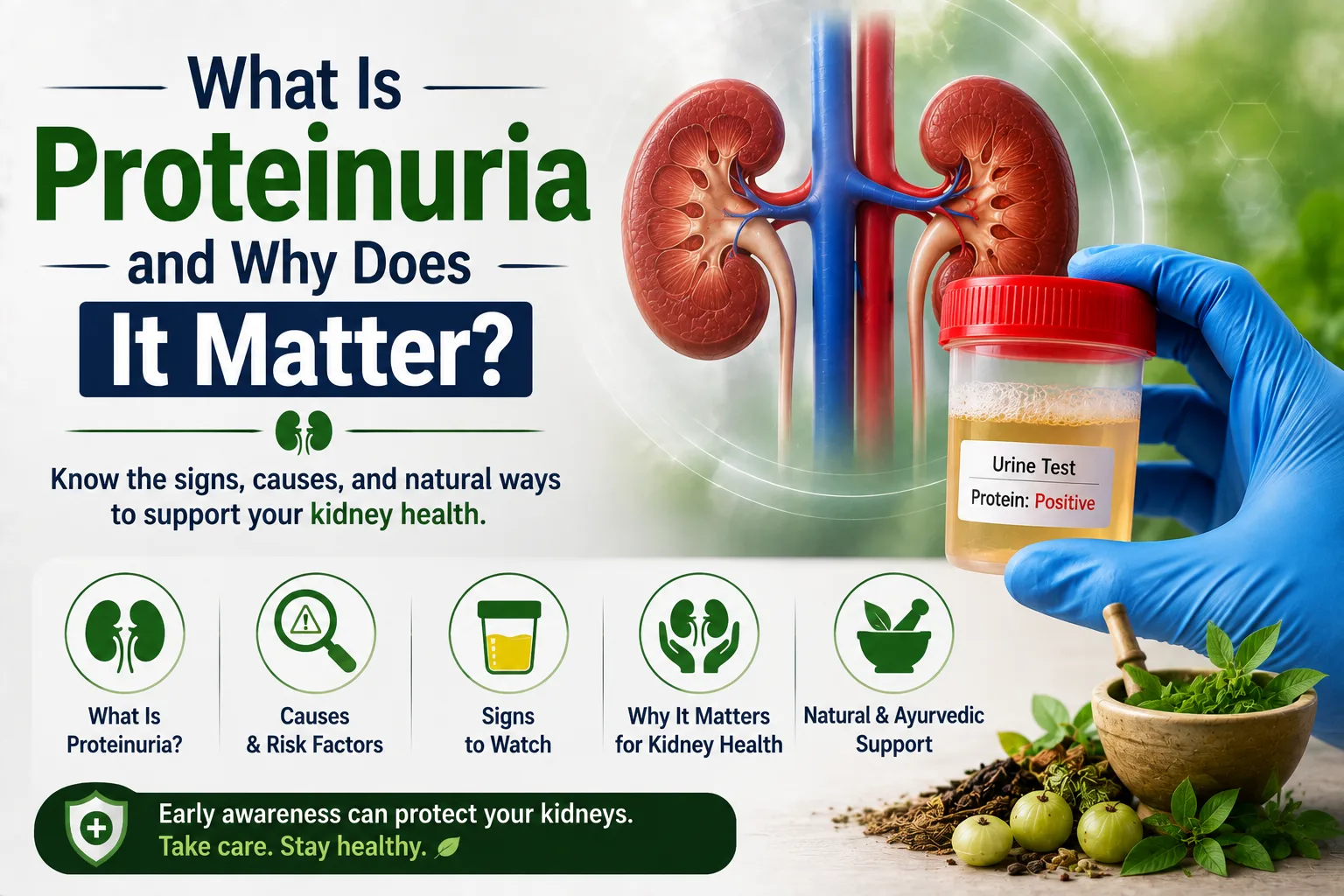
Proteinuria simply means there's too much protein in your urine, and no, that's not your body trying to save protein for later like leftover pizza in the fridge. It's usually a sign your kidneys aren't filtering things the way they should.
Here's the thing about kidneys: they're the ultimate bouncers of your body. Every day, they filter around 150-180 liters of blood, deciding what stays (protein, blood cells, all the good stuff) and what goes (waste, excess fluid, that extra cup of chai you didn't need). When those bouncers get tired or damaged, they start letting the wrong crowd out; namely, protein that should be staying in your bloodstream, not making a break for it through your urine.
That's kidney proteinuria in a nutshell. And while a little protein in urine now and then isn't necessarily a five-alarm fire (intense exercise, fever, or even standing for too long can cause a temporary blip), persistent protein in your urine is your kidneys waving a little red flag.
📞 Get a Kidney Health Consultation – Call Now!
Think of your kidney's filtering unit (called the glomerulus, if you want to sound smart at dinner parties) like a very fine sieve. When it's healthy, it keeps large molecules like protein in the blood where they belong. But conditions like diabetes, high blood pressure, infections, or autoimmune diseases can damage this sieve, making the holes bigger than they should be. Protein slips through, and voilà: proteinuria.
A large-scale nationwide cohort study published in Scientific Reports followed over 1.7 million people and found that proteinuria is an important risk factor for cardiovascular disease and acts as a surrogate marker of renal damage. In plain English: your urine might be quietly telling you something about your heart, too.
Here's why proteinuria matters: it's often one of the earliest warning signs of kidney trouble, showing up well before you'd notice any other symptoms. Research published in Nature Reviews Cardiology points out that proteinuria is a sign of persistent dysfunction of the glomerular barrier and often precedes any detectable decline in renal filtration function. So basically, your kidneys are texting you an early warning before things get serious; you just need to check your phone (or in this case, get a kidney test).
A massive individual patient-level meta-analysis covering nearly 150,000 participants across 38 cohorts, published in the Annals of Internal Medicine, confirmed that higher urinary protein levels had a strong, consistent association with increased risk for kidney failure, reinforcing just how much this one lab value can reveal.
📞 Get a Kidney Health Consultation – Call Now!
Good news: figuring out if you have protein in your urine doesn't require anything dramatic. A simple urine dipstick test can flag it in minutes, and if needed, your doctor might follow up with a more detailed 24-hour urine collection or a urine albumin-to-creatinine ratio test.
Here's a quick, only-slightly-dramatic comparison of what your results might mean:
|
Result |
What It Basically Means |
Should You Panic? |
|
Trace protein |
Probably nothing, maybe dehydration or exercise |
Nope, drink some water |
|
Mild proteinuria |
Kidneys are a little stressed |
Worth a follow-up test |
|
Persistent/heavy proteinuria |
Kidneys are actively struggling |
Time to see a kidney disease doctor |
📞 Get a Kidney Health Consultation – Call Now!
Don't self-diagnose off a single test; proteinuria can be temporary
Get retested to confirm it's persistent, not a one-off
Ask your doctor about your renal health history, especially if you have diabetes or high blood pressure
Keep blood pressure and blood sugar in check; both are major drivers of kidney damage
Don't ignore swelling in your ankles or unusually foamy urine (yes, foamy urine is a real clue, not a myth)
The bottom line: catching protein in your urine early can genuinely change the trajectory of your kidney health. Kidneys are quiet organs; they don't complain loudly until things are pretty far gone, so a simple pee-in-a-cup test might be one of the most underrated health checks you're skipping.
Proteinuria means excess protein is leaking into your urine, usually due to kidney filter damage
It's often one of the earliest detectable signs of kidney or cardiovascular trouble
A simple urine test can catch it long before symptoms show up
Diabetes and high blood pressure are the biggest risk factors
Persistent proteinuria should always be followed up with a doctor, not ignored
📞 Get a Kidney Health Consultation – Call Now!
It's when your kidneys let too much protein leak into your urine instead of keeping it in your blood.
Not always; it can be temporary from exercise or fever, but persistent protein needs medical follow-up.
Often yes, especially if caught early and the underlying cause, like blood sugar or blood pressure, is managed well.
A simple urine dipstick test or a urine albumin-to-creatinine ratio test can detect it.
Not always, but noticeably foamy urine that doesn't go away is worth mentioning to your doctor.
This article is for general informational purposes only and isn't a substitute for professional medical advice, diagnosis, or treatment. If you notice symptoms or abnormal test results, please consult a qualified healthcare provider before making any health decisions.