Jun 06 , 2026
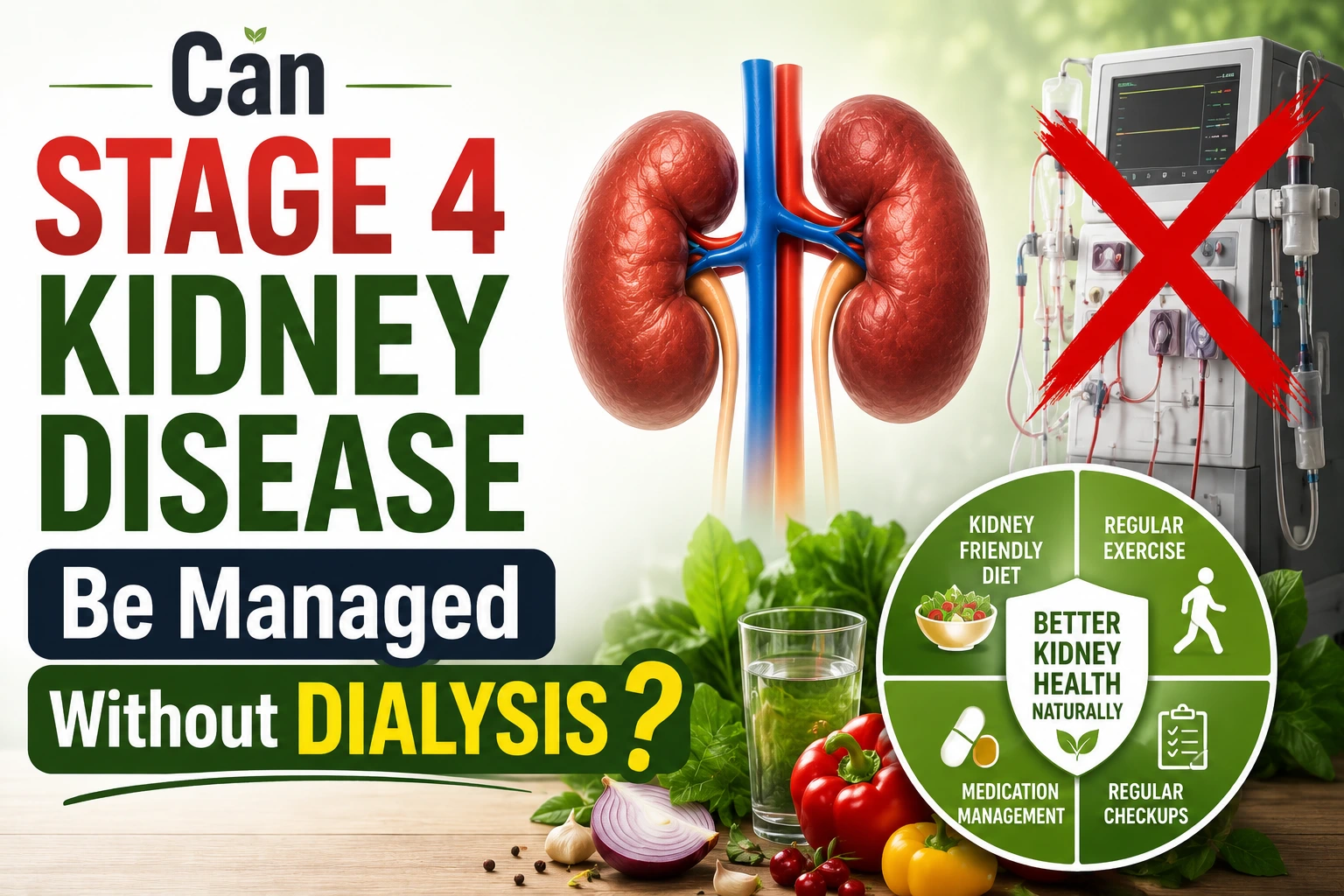
If you or a loved one has been diagnosed with chronic kidney disease stage 4, you might feel like you are standing at the edge of a cliff, looking down at a giant machine that wants to clean your blood three times a week. But here is the good news: dialysis is not an absolute, immediate certainty the second you hit Stage 4.
Yes, your kidneys are definitely in the "rebellion phase," but managing stage 4 kidney disease without jumping straight into dialysis is entirely possible. Think of your kidneys right now as an exhausted IT support team. They are running slow, they are understaffed, and they have closed half their support tickets, but they haven't completely walked out of the building yet. With the right strategies, you can help them keep the lights on for a very long time.
Let’s dive into how we can give your kidneys the ultimate spa day; medical style; and explore treatment options for advanced CKD.
📞 Get a Kidney Health Consultation – Call Now!
To understand how to take care of your kidneys, we need to look at what they actually do. Most people think kidneys just make urine. In reality, they are the body’s ultimate chemical engineers, waste management specialists, and blood pressure bouncers all rolled into one.
When you have Stage 4 Chronic Kidney Disease (CKD), your Glomerular Filtration Rate (GFR), which is just a fancy medical term for "how fast your kidneys filter trash," drops between 15 and 29. In plain English, your kidneys are operating at about 15% to 29% of their normal capacity.
Imagine trying to clean a massive, chaotic Thanks giving kitchen with only one functional hand and a single piece of paper towel. That is what your kidneys are dealing with every day. Because they are running behind on chores, you might start noticing a few bodily complaints, officially known as the Symptoms of Advanced Kidney Disease. These can include:
The Fatigue Monster: Feeling like you ran a marathon when you actually just walked to the mailbox.
The Balloon Effect: Swelling in your ankles, feet, or hands because your body is hoarding fluid like a camel.
The Weird Taste: A persistent metallic taste in your mouth that makes your favorite foods taste like pennies.
Brain Fog: Forgetting why you walked into a room or staring at your keys wondering what they belong to.
📞 Get a Kidney Health Consultation – Call Now!
It is the elephant in the medical room: When Is Dialysis Needed? Many people assume that Stage 4 means "pack your bags, we are going to the dialysis clinic tomorrow." Fortunately, that is a myth.
Dialysis is generally reserved for Stage 5 CKD, which is when your kidney function drops below 15%, or when your body is experiencing life-threatening symptoms that cannot be controlled with medications or diet.
Doctors look at your overall well-being, not just a single lab number. If your blood chemistry is stable, your blood pressure is under control, and you aren't overwhelmed by severe symptoms, you can absolutely focus on Stage 4 CKD treatment to keep dialysis at bay.
If we want to keep the dialysis machine turned off, we need a solid strategy. Think of this as putting your kidneys on "light duty." We want to give them as little work to do as possible so they can stretch out their remaining strength.
Here is how to slow kidney function decline using a combination of medical science, dietary shifts, and lifestyle tweaks.
Proteins are the building blocks of life, but when your body breaks them down, it creates a waste product called urea. Your kidneys are responsible for throwing urea in the trash. When you eat a massive steak, you are essentially burying your tired kidneys under a mountain of extra paperwork.
Switching to a carefully managed low-protein diet is one of the most effective weapons in your arsenal. A landmark clinical trial in the United States, the Modification of Diet in Renal Disease (MDRD) Study, demonstrated that carefully restricting dietary protein can significantly reduce the workload on failing kidneys and help preserve remaining function.
Many modern nephrologists (kidney doctors) recommend shifting toward plant-based proteins, which are much gentler on your filtration system than red meat.
Your kidneys are packed with millions of tiny, delicate blood vessels. If your blood pressure is too high, it hits those vessels like a rogue wave smashing into a sandcastle. High blood pressure is both a cause and a result of kidney disease, creating a frustrating cycle.
Keeping your blood pressure strictly below the targets set by your doctor is non-negotiable for advanced kidney disease treatment. This usually requires a class of medications called ACE inhibitors or ARBs. These drugs don't just lower blood pressure; they actually dilate the blood vessels inside the kidney, acting like a protective shield.
📞 Get a Kidney Health Consultation – Call Now!
Because your kidneys are struggling to expel extra fluid and sodium, eating salty foods will cause you to retain water faster than a sponge. This strains your heart and elevates your blood pressure.
Skipping the salt shaker and avoiding processed foods are necessary steps. However, be careful with "low-sodium" commercial products, as they often substitute sodium with potassium, and too much potassium can cause serious heart rhythm issues when your kidneys can't filter it out!
📞 Get a Kidney Health Consultation – Call Now!
Dietary changes are fantastic, but you also need a strong medical blueprint. Modern treatment for kidney disease stage 4 relies heavily on targeted medications to manage the complications that arise when the kidneys slow down.
|
Kidney Complication |
Typical Medical Management Strategy |
|---|---|
|
Anemia (Low Red Cells) |
Erythropoietin-stimulating agents |
|
Fluid Retention |
Diuretics (Water pills) |
|
High Phosphorus |
Phosphate binders taken with meals |
|
Metabolic Acidosis |
Sodium bicarbonate supplements |
Note: All medications must be strictly managed and prescribed by your nephrologist or an expert like Dr. Puneet Dhawan to ensure safe dosages.
When your kidneys get tired, they stop producing enough of a hormone called erythropoietin, which tells your bone marrow to make red blood cells. This leads to anemia, which is why you feel so incredibly wiped out. Doctors can give you synthetic versions of this hormone to restore your energy levels.
Additionally, as noted in the chronic kidney disease-Mineral and Bone Disorder (CKD-MBD) Guidelines, failing kidneys struggle to balance phosphorus and calcium, which can weaken your bones. Taking phosphate binders with your meals prevents your body from absorbing too much phosphorus, protecting both your bones and your blood vessels.
📩 Ask a Kidney Expert (Free 10-Min Consultation)
There is a growing movement in US medicine called Conservative Kidney Management (CKM) or Comprehensive Conservative Care. This is an official, evidence-based treatment for kidney disease stage 4 where patients, families, and doctors choose to focus entirely on quality of life, symptom control, and preserving existing kidney function without ever using dialysis.
A major study published in the Clinical Journal of the American Society of Nephrology (CJASN) compared older patients who chose conservative management against those who chose dialysis. The researchers found that for many elderly individuals with multiple health conditions, conservative management provided a highly comparable quality of life and successfully managed symptoms without the physical stress and disruption of regular dialysis sessions.
This approach focuses heavily on kidney function support for stage 4 CKD by utilizing precise medication adjustments, holistic symptom management, and dedicated nutritional counseling.
When you are trying to protect your remaining kidney function, you have to be careful about what you put into your body. Some everyday items are highly toxic to weakened kidneys.
Avoid NSAIDs Like the Plague: Over-the-counter painkillers like ibuprofen and naproxen are notoriously harsh on kidneys. They reduce blood flow to the kidneys almost instantly. Stick to acetaminophen if you have a headache, or better yet, consult your nephrologist before taking any pain relief.
Beware of Herbal Supplements: Just because a supplement label says "all-natural" does not mean it is safe. Many herbal remedies contain heavy metals or chemical compounds that your kidneys will struggle to process.
Stay Appropriately Hydrated: There is a common myth that you should chug gallons of water to "flush out" your kidneys. If you have Stage 4 CKD, overloading your body with water can overwhelm your system and cause dangerous fluid buildup. Drink when you are thirsty, but follow the specific fluid limits provided by your healthcare team.
📞 Get a Kidney Health Consultation – Call Now!
Managing Stage 4 CKD is definitely a team sport. You shouldn’t try to do this alone with a search engine and a dream. You need a dedicated squad consisting of a nephrologist, a specialized renal dietitian, and your primary care physician.
A renal dietitian is particularly vital. They can look at your specific blood work and tell you exactly how many milligrams of potassium, phosphorus, and protein you can enjoy each day without overloading your system. They turn a restrictive medical diet into an actual, edible meal plan so you don't end up living entirely on plain white rice and sadness.
Receiving a Stage 4 kidney disease diagnosis can feel incredibly overwhelming, but remember: your kidneys are still working. They might be operating like an ancient desktop computer trying to load a modern video game, but they are still in the game.
By aggressively managing your blood pressure, restructuring your diet to lower protein and sodium, avoiding harmful medications, and working hand-in-hand with a medical team, you can achieve excellent kidney function support for stage 4 CKD. You can protect your health, live a vibrant life, and potentially delay, or entirely avoid, the need for dialysis. Keep your chin up, step away from the salt shaker, and give your kidneys the quiet, well-managed environment they need to keep on filtering.
📩 Ask a Kidney Expert (Free 10-Min Consultation)
Dialysis is not immediate: Stage 4 is a warning track, not the finish line.
Lower your protein: Plant-based swaps significantly reduce kidney workload.
Control blood pressure: Keeping numbers low prevents vascular damage.
Ban all NSAIDs: Ibuprofen and naproxen actively crush kidney function.
Ditch the salt: Cutting sodium stops dangerous fluid retention.
Medication over machines: Conservative medical management can delay or replace dialysis.
No, the damage is permanent, but proper medical treatment can stop it from getting worse.
Many people safely stabilize and live for several years before ever needing dialysis.
Managing your blood pressure, eating a low-protein diet, and taking doctor-prescribed kidney medications.
Yes, strict lifestyle changes and active medical care can delay or entirely avoid dialysis.