Jul 14 , 2026
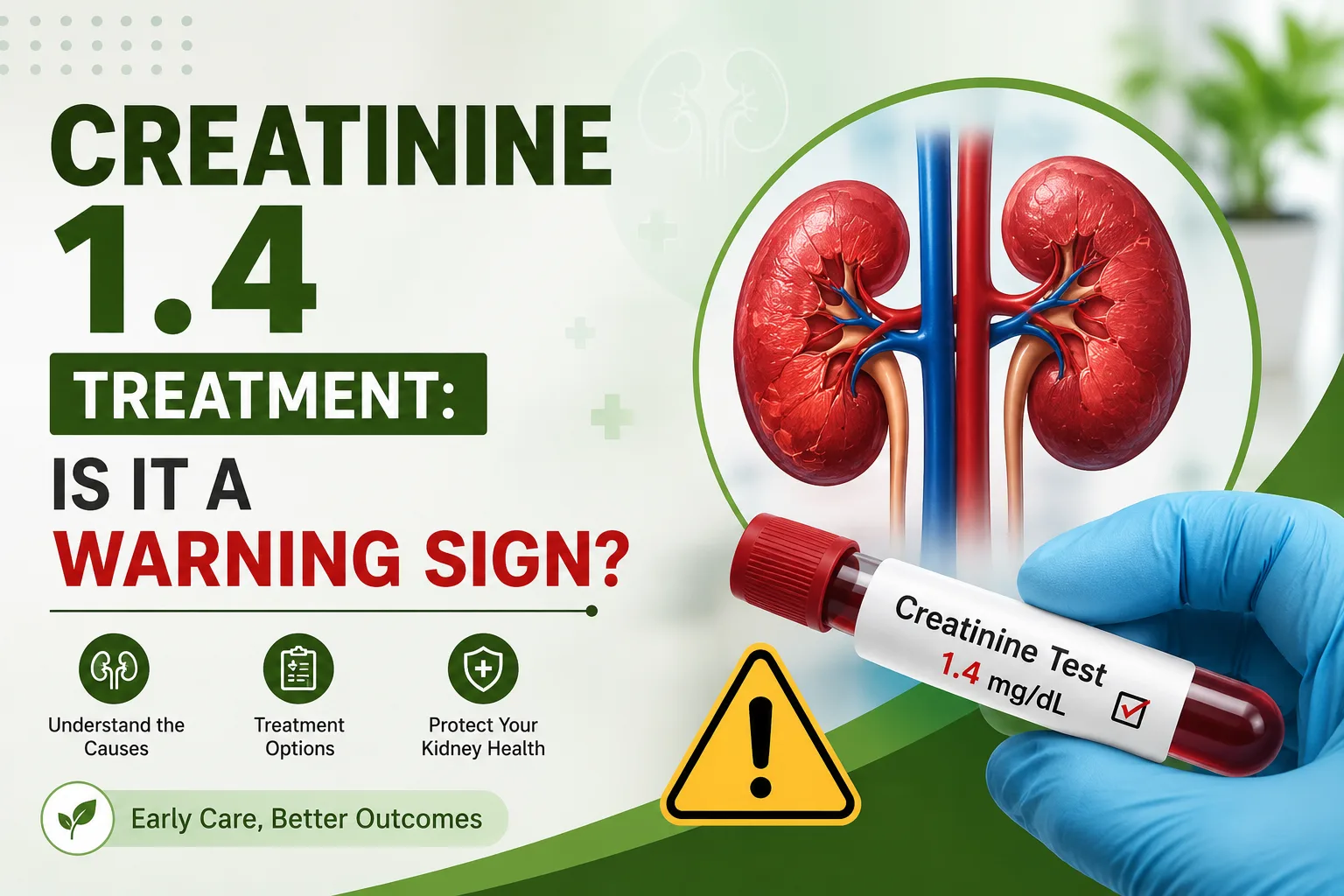
No, a creatinine level of 1.4 is not an immediate red alert, but it is a friendly tap on the shoulder from your kidneys asking for a little attention. Think of it as a check engine light that just started flickering; you don’t need to pull over on the highway and panic, but you definitely shouldn't ignore it on your next trip to the mechanic.
When you get your lab results back and see that number, your first instinct might be to frantically search for a creatinine 1.4 treatment online. Let’s take a deep breath together. Creatinine is just a waste product your muscles make when they break down. Before you assume the worst, let’s unpack exactly what does creatinine 1.4 mean for kidney health and why context is everything.
📞 Get a Kidney Health Consultation – Call Now!
To understand why your doctor ordered a kidney test, we have to look at what your kidneys actually do. They are the ultimate biological lint traps. They filter out the junk, balance your fluids, and keep your body running smoothly.
Creatinine is a byproduct of daily muscle wear and tear. If you are a bodybuilder who eats steak for breakfast and lifts cars for fun, your baseline creatinine might naturally be a bit higher. If you're a petite individual who thinks lifting a remote control is a workout, it might be lower.
Usually, normal levels hover around 0.6 to 1.2 mg/dL for men and 0.5 to 1.1 mg/dL for women. So, a 1.4? It’s sitting right on the fence. It means your renal function might be slightly sluggish, but it could also mean you just didn't drink enough water before your blood draw.
To keep you from spiraling, let’s look at how doctors view these numbers. It’s all about context, not just a single digit on a page.
|
Creatinine Level |
What Your Kidneys Are Likely Saying |
Action Plan |
|
0.5 – 1.2 |
"We’re good! Keep the water coming." |
Keep doing what you're doing. |
|
1.3 – 1.5 |
"Hey... you awake down there? Give us a glass of water." |
Investigate creatinine 1.4 treatment options, retest, and hydrate. |
|
2.0 and above |
"Okay, we need some serious backup here." |
Time to actively work with a specialist. |
📞 Get a Kidney Health Consultation – Call Now!
A slight bump in your kidney function numbers can be caused by a surprising mix of everyday habits and underlying health conditions. According to a landmark study published in The New England Journal of Medicine (the Chronic Kidney Disease Epidemiology Collaboration), minor fluctuations in filtration rates are incredibly common and often reversible if caught early.
Dehydration: If you live on coffee and forget that water exists, your kidneys have to work twice as hard to concentrate your urine.
Heavy Lifting or Intense Exercise: Crushing it at the gym can temporarily spike creatinine because you're breaking down muscle tissue.
Medications: Over-the-counter painkillers like ibuprofen (NSAIDs) are notoriously tough on the kidneys if taken like candy.
High Blood Pressure or Diabetes: These two are the ultimate troublemakers for long-term kidney health.
Here is the secret: there isn't a magical pill specifically called a creatinine 1.4 treatment. Instead, managing this number means treating your body a whole lot better and tackling the root cause.
A famous long-term study, the Modification of Diet in Renal Disease (MDRD) Study, showed that simple dietary and lifestyle tweaks are incredibly powerful in halting the progression of early kidney strain. Here is what you can do starting today:
Chug that water: Aim for steady hydration throughout the day, not just chugging a gallon right before your next test.
Reconsider your protein powders: If you're scooping massive amounts of creatine or protein supplements, give your kidneys a break.
Watch the salt shaker: High blood pressure strains the delicate blood vessels in your kidneys.
Get a retest: Do not panic based on one single lab result. Take another test in a few weeks after drinking plenty of water.
If your numbers stay elevated or you have underlying conditions like diabetes, it might be time to chat with a kidney disease doctor (a nephrologist). They can look at your overall trends and help you build a personalized roadmap for proactive kidney care.
A creatinine level of 1.4 is a yellow light, not a red stop sign.
Dehydration, supplements, and certain medications can easily cause temporary spikes.
Focusing on blood pressure control and hydration is the best natural defense.
Always get a second test to confirm the trend before jumping to conclusions.
📞 Get a Kidney Health Consultation – Call Now!
Yes, being dehydrated concentrates your blood and temporarily inflates your creatinine numbers.
Not immediately, but it is smart to consult a doctor to retest and check your overall trends.
It helps flush your system if you were dehydrated, but it won't fix chronic, structural kidney issues overnight.
Yes, intense weight training breaks down muscle and can absolutely bump your creatinine levels up for a short time.
Disclaimer: Look, I’m an AI writer, not your doctor. This blog is meant to give you a friendly, helpful overview of what that 1.4 number means, but it should never replace professional medical advice, diagnosis, or treatment from a real healthcare professional. Always talk to your doctor about your lab results!