Sep 04 , 2026
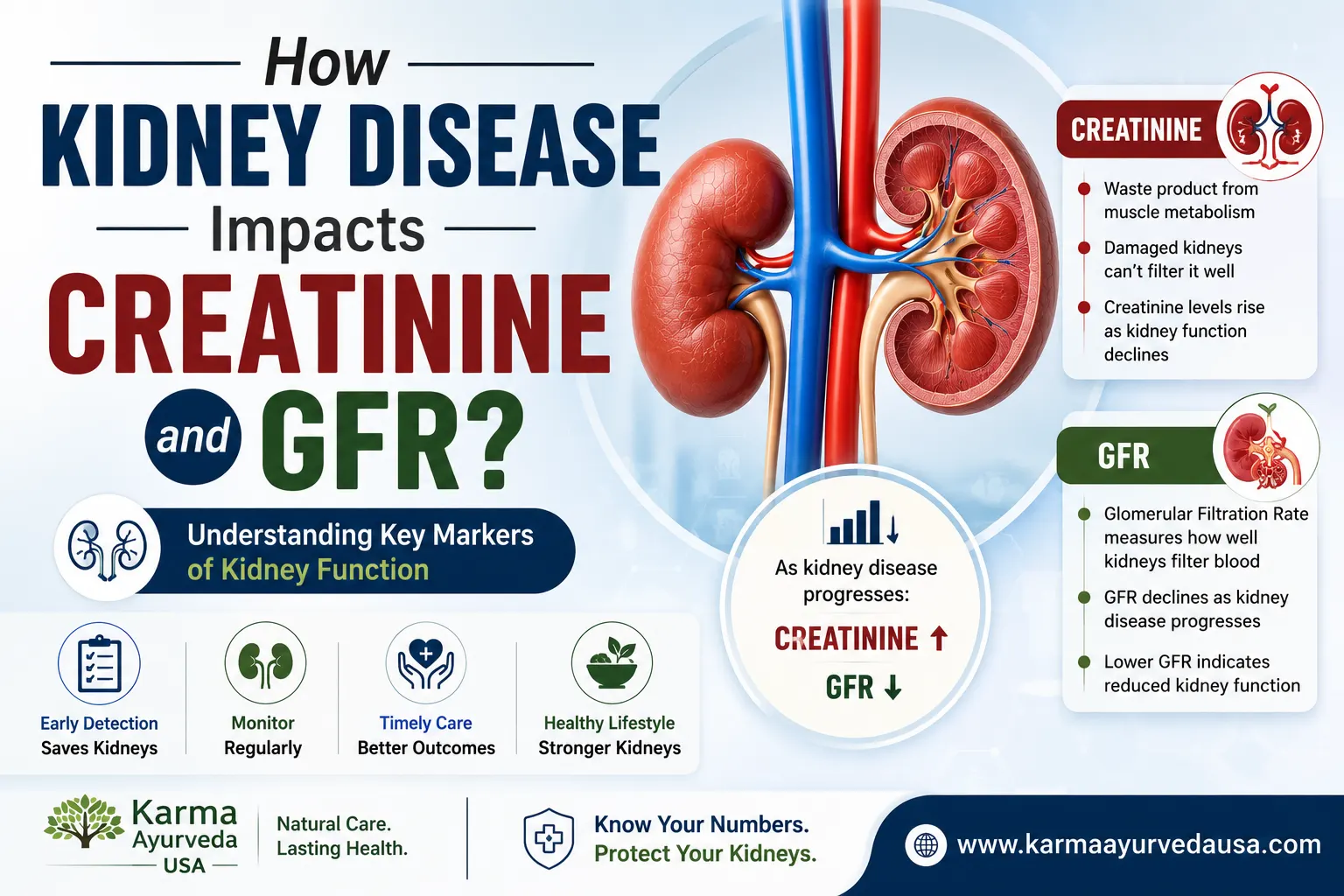
Kidney disease makes your creatinine climb and your GFR fall. That's it. That's the relationship. Your renal function is basically the referee between these two numbers, and when it starts slipping, the scoreboard changes.
Okay, but what does any of that actually mean? Fair question. I remember staring at my dad's lab report a few years back, seeing "creatinine: 1.6" and having absolutely no idea if that was bad, mildly bad, or "call an ambulance" bad. Nobody hands you a manual for this stuff. So let's just talk it through, the way I wish someone had explained it to me back then.
📞 Get a Kidney Health Consultation – Call Now!
Your muscles produce a waste product called creatinine, basically all day, every day, whether you're at the gym or on the couch. Normally, your kidneys filter it out and you pee it away without ever thinking about it. That's the whole system working exactly as it should.
GFR stands for Glomerular Filtration Rate, which sounds intimidating but really just means "how fast are my kidneys filtering my blood right now." Higher GFR, better filtering. Lower GFR: your kidneys are struggling to keep up.
Now here's the part that trips people up. These two numbers move in opposite directions. When kidneys get damaged, they can't clear creatinine as well, so it builds up in the blood. At the same time, GFR drops because, well, the filtering capacity that GFR measures is literally shrinking. One goes up, one goes down, same underlying cause.
Kidneys are made of millions of tiny filtering units called nephrons. Conditions like diabetes, long-term high blood pressure, infections, or autoimmune diseases damage these nephrons over time. And once a nephron is gone, it's gone. There's no growing new ones.
Fewer working nephrons means less total filtering. Less filtering means creatinine hangs around longer in your blood instead of leaving with your urine. This is measurable, and it's actually been studied quite a bit. The research behind the CKD-EPI equation (published through work in the American Journal of Kidney Diseases) is a good example; it showed that creatinine, combined with age and a few other factors, can reliably estimate how much filtering capacity a person actually has left.
There's also the older MDRD Study, which looked at people with existing kidney issues and found that even small drops in filtration showed up as noticeable creatinine increases, particularly in people whose kidney mass was already reduced. Basically, the damage often starts quietly, long before someone feels sick.
This is the part people usually skip, and it's kind of important. A creatinine of 1.4 is not the same emergency as a creatinine of 5. Context matters too; muscle mass, hydration, age, and whether the number is rising or stable all change what it means.
|
Creatinine reading |
What's usually happening |
How worried should you be |
|
~1.0–1.3 mg/dL |
Normal for most adults, or borderline |
Not really, just note it |
|
~1.4 mg/dL |
Mild elevation, early flag |
A little, keep watching it |
|
~4.2 mg/dL |
Real kidney impairment |
Yes, get this looked at soon |
|
5.0+ mg/dL |
Advanced kidney disease |
Yes, this needs a doctor now |
For someone dealing with creatinine 1.4 treatment, it's usually not scary stuff; better hydration, watching salt and protein intake, and keeping blood pressure in check. Nothing that requires a hospital visit.
Once you're talking about creatinine 4.2 treatment, the approach changes. This is usually managed with medication adjustments, tighter dietary control, and regular follow-ups with a specialist, because at this point renal function has taken a real hit and needs active management, not just lifestyle tweaks.
And creatinine 5 treatment? That's a different conversation entirely. At this stage, doctors are often discussing more intensive options, including preparing for dialysis or exploring transplant conversations, depending on the full picture.
For people exploring natural kidney treatment, it's important to remember that "natural" doesn't automatically mean safe or appropriate for someone with reduced kidney function. Any herbs, supplements, or alternative approaches should be discussed with a healthcare professional before being added to your routine.
📩 Ask a Kidney Expert (Free 10-Min Consultation)
Don't panic over one number without context, but don't ignore a rising trend either
Ask for a proper kidney test if you have diabetes, high blood pressure, or a family history of kidney problems
Watch the trend across multiple tests, not just one report
If numbers are climbing, see a kidney disease doctor rather than waiting it out
Stay hydrated, go easy on painkillers that stress the kidneys, and keep blood pressure managed
Creatinine rises and GFR falls together as kidney function declines
The actual number matters less than the trend and the context around it
A 1.4 reading calls for lifestyle changes, a 4.2 calls for medical management, a 5 calls for urgent specialist care
Regular testing catches trouble early, often before you'd ever feel symptoms
Renal function can often be protected, even if it can't fully be restored once damaged
If you're considering the best Ayurvedic herbs for kidneys, discuss them with your doctor first, particularly when creatinine or GFR is already abnormal
Kidneys don't complain loudly. They just quietly do less and less until a lab report finally says something. That's honestly the frustrating part; by the time you feel unwell, a fair amount of damage may already be done. So if you've got risk factors, or if it's just been a while since your last check-up, get the test done. It's boring, it's five minutes of your time, and it might save you a much longer conversation down the road.
Not always; dehydration, heavy workouts, or certain medications can push it up temporarily too.
Sometimes early damage can be slowed or partly improved, but once nephrons are gone, that part usually doesn't come back.
Once a year is a decent starting point if you have risk factors, though your doctor might suggest more frequent checks.
Yes, it usually points to real kidney impairment and shouldn't be left unaddressed.
It can help, especially in earlier stages, but it usually works best alongside medical guidance rather than on its own.
Disclaimer: This article is meant for general information only and isn't a substitute for advice from a qualified doctor. Creatinine and GFR readings can mean very different things depending on the person. Please talk to a medical professional before acting on anything here.