Jul 22 , 2026
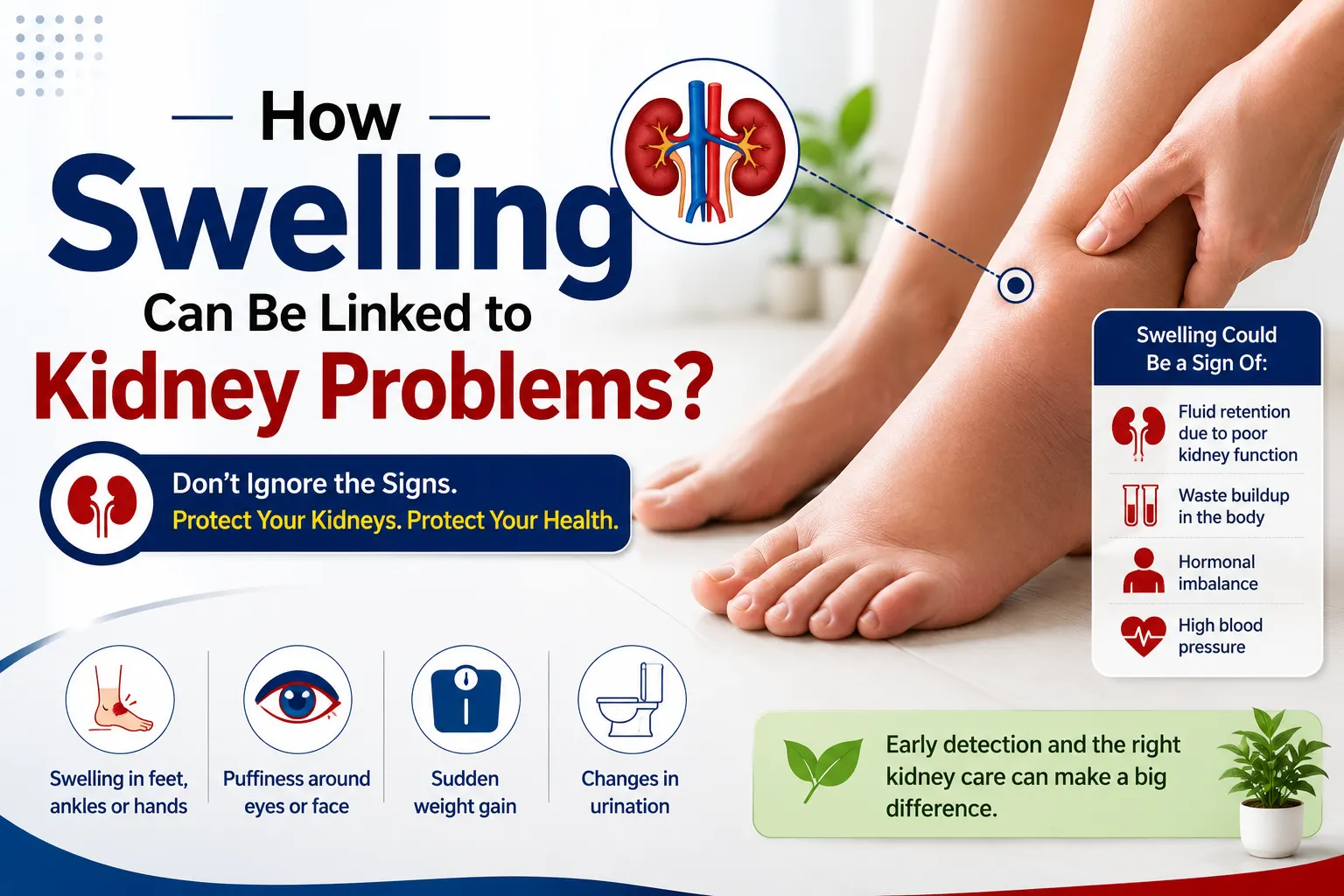
When your kidneys struggle to filter waste, extra fluid and sodium back up in your body, directly causing puffiness in your face, hands, ankles, and feet. Think of your kidneys as your body's ultimate plumbing dynamic duo; when they slow down, the water pressure builds up where it shouldn't.
If you have ever woken up looking like you went three rounds in a boxing ring, or noticed your socks leaving deep dents in your ankles, you might be dealing with swelling linked to kidney problems. While a salty takeout meal can occasionally make us feel bloated, persistent puffiness, scientifically known as edema, is something to keep an eye on. It can be a sneaky, early sign of kidney disease that warrants some investigation rather than just buying bigger shoes.
📞 Get a Kidney Health Consultation – Call Now!
Your kidneys work tirelessly to filter out waste and excess fluid from your blood. When they are healthy, everything stays perfectly balanced. However, if they become damaged, they lose their filtering power.
According to the landmark Chronic Kidney Disease Epidemiology Collaboration (CKD-EPI) Study, when kidney function drops, sodium retention spikes. Because water always follows salt, your body starts holding onto fluid for dear life. Instead of being flushed away, this extra water leaks into your tissues. Gravity naturally pulls it down into your lower extremities, turning your ankles into balloons.
Another culprit is losing too much protein in your urine. Your kidneys are supposed to keep proteins in your blood to act like tiny sponges that hold water inside your blood vessels. When the filters fail, these protein sponges escape. With nothing left to hold the water inside your veins, fluid leaks out into the surrounding tissues, especially around the eyes where the skin is incredibly thin and stretchy.
How do you know if you just ate too many potato chips or if you need actual kidney disease help? Let's break down the differences in a simple, straightforward way:
|
The Situation |
A Heavy Salt Meal |
Kidney-Related Edema |
|
Primary Location |
General mild bloating all over. |
Focused on ankles, feet, hands, and puffy eyes. |
|
Duration |
Disappears after a few glasses of water and a good night's sleep. |
Sticks around for days and doesn't care how much water you drink. |
|
The "Dent" Test |
Skin springs back immediately when pressed. |
Pressing your thumb leaves a lingering dimple (pitting edema). |
|
Other Clues |
Just a bit of thirst. |
Foamy urine, fatigue, or changes in how often you pee. |
📞 Get a Kidney Health Consultation – Call Now!
Swelling is rarely a solo act. As kidney function declines, other symptoms tend to join the party. A long-term kidney disease patient might notice that their urine looks unusual. If your urine looks like it has a frothy beer head on top, that is a classic indicator that protein is escaping.
If ignored over time, chronic kidney strain can progress toward advanced stages, including full renal failure. In these advanced scenarios, fluid buildup can become severe enough to affect the lungs, leading to shortness of breath. This is why paying attention to early bodily whispers, like tight rings or stubborn sock marks, is so crucial before they turn into full-blown shouts.
If you suspect your swelling is trying to tell you a story about your kidneys, the best step is to seek proper kidney care. A quick trip to a healthcare professional can clear up the mystery. Usually, a simple blood test to check your filtration rate and a quick urine sample to look for protein can give you a clear map of what is happening inside.
Getting professional kidney disease help early on makes a massive difference. Managing blood pressure, adjusting your diet to watch the sodium, and sometimes using mild medications to help flush out the extra water can get your internal plumbing running smoothly again.
The Kidney Connection: Swelling happens when damaged kidney filters fail to balance sodium and fluids, causing water to pool in your tissues.
Watch the Eyes and Ankles: Puffy eyelids in the morning and dent-leaving ankle swelling are two major clues.
Protein Matters: Foamy urine means you might be losing protein, which forces fluid out of your blood vessels and into your skin.
Early Detection Wins: Simple, routine tests can catch issues early, keeping you away from severe complications.
📞 Get a Kidney Health Consultation – Call Now!
When kidneys cannot remove enough sodium and water, gravity pulls that trapped, excess fluid straight down into your feet and ankles.
It usually feels heavy, tight, and stretched, and if you press your thumb into it, it leaves a dimple that takes a few seconds to pop back out.
Not always, because if your kidney filters are struggling, chugging extra water can sometimes add to the fluid overload instead of clearing it.
It can be managed and significantly reduced once a doctor addresses the root cause and helps restore your fluid balance.
This article is for informational and educational purposes only and should not be taken as professional medical advice. Always consult with a qualified healthcare provider or nephrologist regarding any persistent swelling, changes in urination, or potential health concerns.