Aug 25 , 2026
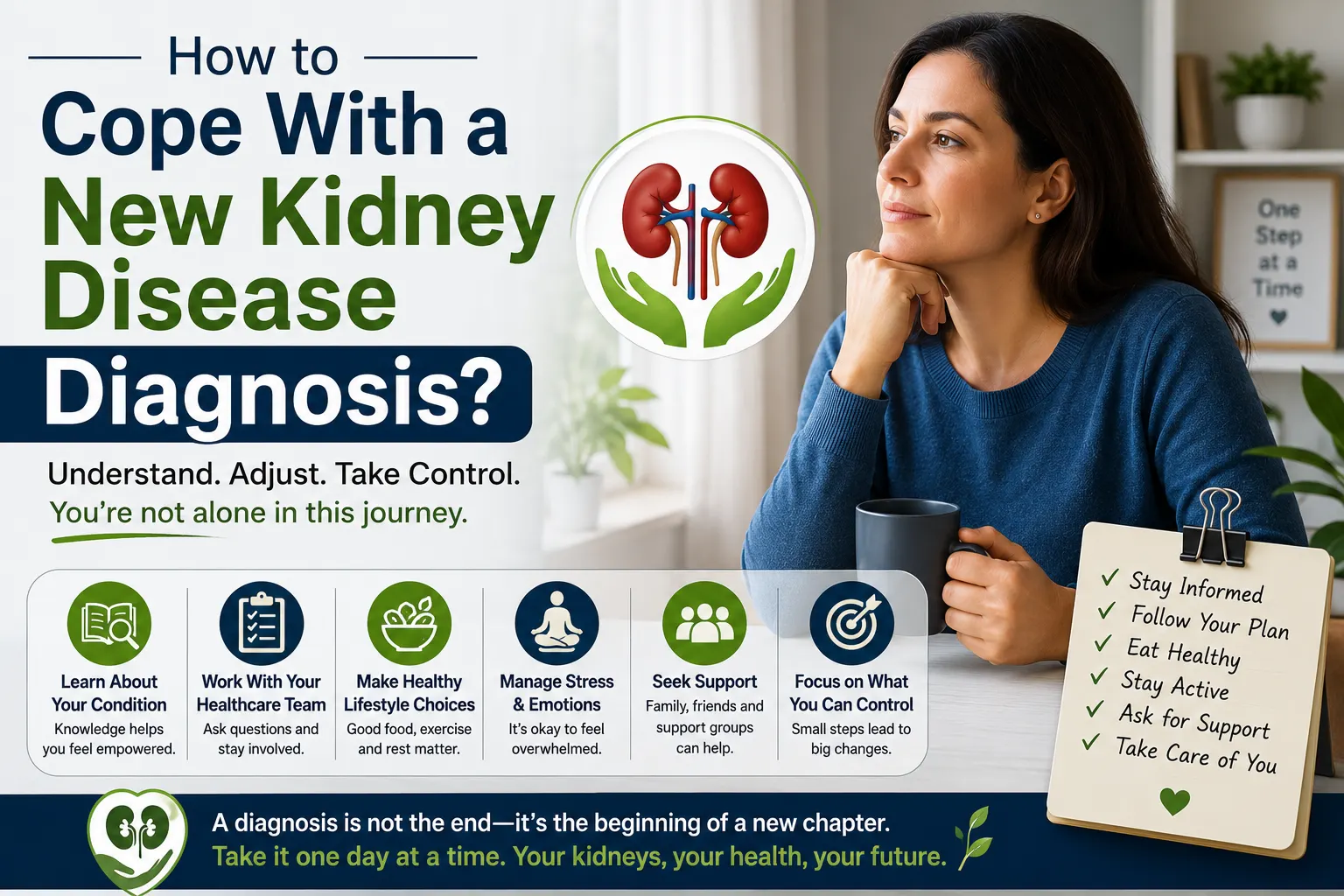
You cope with a new kidney disease diagnosis by permitting yourself to freak out for a day, then getting organized, building a care team you trust, and taking it one lab report at a time. Easier said than done, we know; so let's actually walk through how a kidney disease patient gets from "wait, what?" to "okay, I've got this."
Nobody schedules a kidney diagnosis into their calendar between brunch and laundry day. It shows up uninvited, usually after a routine blood test throws a number at you that you didn't even know existed (hello, creatinine). And here's the thing nobody tells you upfront: feeling scared, numb, angry, or weirdly calm are all normal reactions. There's no "correct" way to react to news about your kidneys.
Research backs this up; a 2023 study published in Nephrology Dialysis Transplantation found clinically significant anxiety in over 50% and depression in over 35% of people living with chronic kidney disease (CKD). So if your brain immediately jumped to worst-case-scenario mode, congratulations, you're wonderfully human and in very good company.
📩 Ask a Kidney Expert (Free 10-Min Consultation)
Think of managing kidney disease like assembling a slightly nerdy Avengers team, except instead of fighting aliens, you're fighting inflammation and sodium. Your kidney disease doctor (a nephrologist) is your Captain America here; the one steering the mission. But good kidney care rarely rests on one person alone; it usually includes a dietitian, your regular physician, maybe a diabetes educator, and definitely your family or a friend who won't let you Google symptoms at 2 a.m.
A 2018 study on self-management support for CKD patients (published in BMC Nephrology) found that people who received structured, personalized education showed meaningful improvements in confidence and self-management behavior. Translation: understanding your condition genuinely helps you handle it better; knowledge really is a form of medicine here.
You will hear terms like GFR, eGFR, and renal function thrown around like everyone's supposed to already know them. Here's the blunt version: these numbers just measure how well your kidneys are filtering waste from your blood. They're not a grade on a report card. A lower number doesn't mean you failed at life; it means your kidneys need backup, and now you know to give it to them.
Ask your doctor to explain your specific stage in plain English; not medical-school English. A good doctor won't mind repeating themselves. If they do, that's a sign to shop around.
CKD treatment isn't one-size-fits-all. It depends on your stage, your other health conditions, and honestly, your lifestyle. Options range from dietary changes and blood pressure management in early stages to medications and eventually, dialysis or transplant discussions in advanced stages. The goal early on is almost always to slow things down, not scramble for a cure that isn't the point.
For people interested in complementary approaches, Ayurvedic kidney disease treatment may be something they come across while researching their options. Ayurveda for kidney disease generally takes a broader approach, often focusing on diet, lifestyle, herbs, and individualized care. However, it should not be used as a replacement for medically recommended CKD care.
People also search for a natural treatment for kidney disease, but "natural" doesn't automatically mean safe for someone with reduced kidney function. Certain herbs, supplements, and even common remedies can interfere with medications or may not be appropriate for particular CKD stages. That's why it's important to discuss any complementary treatment with your nephrologist or a qualified healthcare professional.
You'll also see plenty of lists claiming to identify the best herbs for kidney disease. The reality is less click-friendly: there isn't one universally "best" herb for every person with kidney disease. What may be appropriate depends on kidney function, medications, underlying conditions, and other individual factors.
|
Coping Strategy |
What It Actually Looks Like |
Why Your Kidneys Approve |
|
Cutting back on salt |
Reading labels like a suspicious detective |
Less strain on filtration |
|
Staying hydrated (as advised) |
Actually finishing that water bottle |
Helps waste move along |
|
Journaling feelings |
Yelling at a notebook instead of your family |
Lowers stress hormones |
|
Regular checkups |
Showing up even when you feel "fine" |
Catches changes early |
|
Asking questions |
Being "that patient" in appointments |
Better-informed decisions |
📞 Get a Kidney Health Consultation – Call Now!
Coping with kidney disease diagnosis isn't just a medical project; it's an emotional one too. Give yourself space to grieve the version of "normal" you had before, while also making room for a new normal that can still include good food, laughter, travel, and terrible puns about "filtering out negativity."
Support groups, whether in person or online, tend to help enormously. Talking to someone who's lived through dialysis or a transplant hits differently than a pamphlet ever could. And if sadness or anxiety start running the show for weeks on end, please loop in a therapist; mental health care is part of physical care, not separate from it.
A new diagnosis brings a rollercoaster of emotions; all of them are valid.
Build a care team: nephrologist, dietitian, family, and yourself as team captain.
Understanding your numbers (like GFR) reduces fear and boosts confidence.
Treatment plans vary by stage; ask questions until it makes sense.
Emotional support matters as much as medical support.
If you're exploring Ayurvedic kidney disease treatment or a natural treatment for kidney disease, discuss it with your healthcare team before making changes.
📩 Ask a Kidney Expert (Free 10-Min Consultation)
Yes; with the right adjustments, most people continue working, traveling, and enjoying life fully.
Usually every few months at first, though your doctor will tailor the schedule to your stage and symptoms.
Not always; many people manage CKD for years through lifestyle changes and medication alone.
Completely normal, and very common; please talk to your doctor or a therapist if it lingers.
Yes, especially by reducing sodium and managing blood pressure, which eases the workload on your kidneys.
Disclaimer: This blog is for general information and emotional support only, not medical advice. Every kidney disease case is different, so always consult your nephrologist or healthcare provider before making changes to your diet, medication, or treatment plan.