Aug 14 , 2026
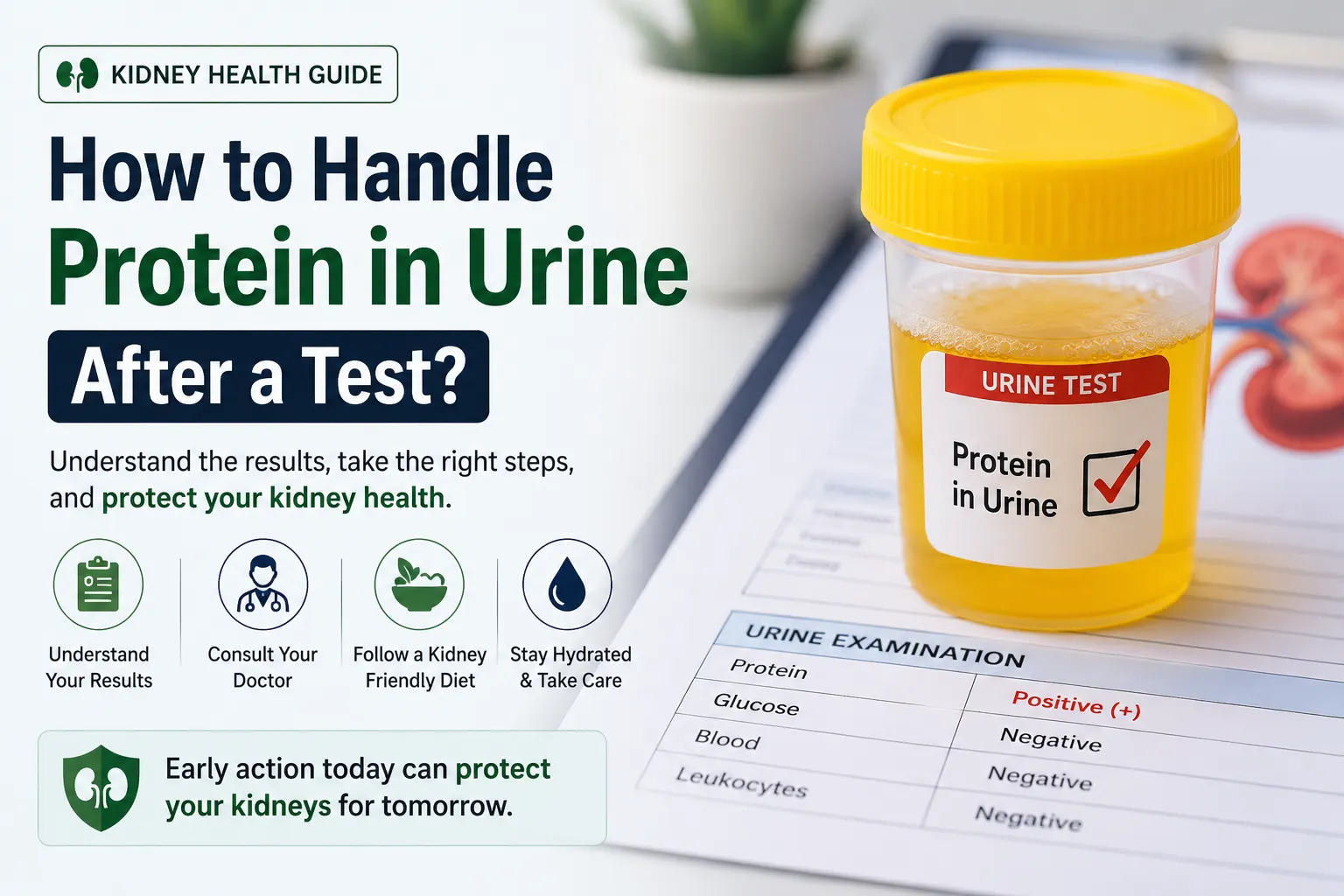
So, your test came back, and there's protein in your urine; should you panic? Short answer: not yet, but it's worth paying attention to. Let's break down what this actually means and what you should do next.
First off, take a breath. Seeing an abnormal result on a lab report can feel like your body just failed a pop quiz you didn't study for. But protein showing up where it "shouldn't" isn't automatically a five-alarm fire. Sometimes it's your kidneys just having an off day; dehydration, a fever, intense exercise, or even standing around too long before the test (yes, that's a real thing; it's called orthostatic proteinuria). Other times, it's your body's way of waving a little flag that says "hey, someone should look at me a bit more closely."
📞 Get a Kidney Health Consultation – Call Now!
Your kidneys are basically bouncers at an exclusive club called "Your Bloodstream." Their job is to filter waste out while keeping the good stuff, like protein, inside where it belongs. When that filter (called the glomerulus, if you want to sound smart at dinner parties) gets a little leaky, protein sneaks past the velvet rope and ends up in your urine.
This condition has a name: kidney proteinuria. It's not a disease itself, but more like a symptom or a clue. Research published by the National Kidney Foundation has long pointed to proteinuria as one of the earliest detectable signs of kidney stress, often showing up before other symptoms even register.
Dehydration (your kidneys working overtime)
Recent intense workout (yes, that leg day counts)
Fever or infection
High blood pressure
Diabetes
Pregnancy-related changes
Standing for long periods before the test
Underlying kidney damage (the one we actually want to rule out)
Notice how "underlying kidney damage" is just one item on a fairly long list? That's the point. One test with slightly elevated protein doesn't mean your kidneys are staging a rebellion.
Step one: don't self-diagnose using a search engine at 1 a.m. (We know, we know; ironic advice coming from an article you're reading online. But hear us out.) Step two: get it checked properly.
Doctors usually don't panic over a single reading either. They'll often ask you to repeat the kidney test after a few days or weeks, especially if the first sample was taken right after exercise or when you were sick. If protein levels stay elevated across repeat tests, that's when it's time to loop in a kidney disease doctor, also known as a nephrologist, for anyone who enjoys fancy medical vocabulary.
A study published in the American Journal of Kidney Diseases found that persistent, rather than one-off, proteinuria is a far stronger predictor of chronic kidney disease progression. Translation: it's the pattern that matters, not the panic-inducing single result.
📞 Get a Kidney Health Consultation – Call Now!
|
Situation |
What It Usually Means |
What To Do |
|
One-time reading, mild |
Probably dehydration, exercise, or stress |
Retest in a few days, drink water, relax |
|
Repeated readings, mild-moderate |
Possible early kidney stress |
See a doctor, get more tests |
|
Persistent, high levels |
Needs proper evaluation |
Nephrologist visit, further kidney care plan |
|
Protein + swelling/fatigue |
Don't ignore this one |
Book an appointment, like, this week |
Stay hydrated (your kidneys will send a thank-you note, metaphorically)
Manage blood pressure and blood sugar if you have existing conditions
Cut back on excess salt and processed food
Avoid overusing painkillers like NSAIDs
Get regular checkups if you're at risk (diabetes, hypertension, family history)
None of this requires becoming a kale-juicing, marathon-running monk overnight. Small, consistent habits genuinely go a long way here.
Finding protein in your urine once isn't automatically scary; context matters.
Repeat testing helps confirm whether it's a fluke or a pattern.
Persistent proteinuria deserves proper medical attention, not internet self-diagnosis.
Lifestyle habits like hydration and blood pressure control genuinely help kidney health.
When in doubt, let a professional look at the full picture.
📞 Get a Kidney Health Consultation – Call Now!
No, it's often temporary and caused by things like exercise, dehydration, or a fever.
Most doctors suggest retesting within a few days to a couple of weeks to see if it was a one-time thing.
Yes, physical or emotional stress can temporarily raise protein levels in a urine test.
Not necessarily; only if repeat tests confirm the protein levels are staying elevated.
Yes, reducing salt intake and staying hydrated can genuinely support healthier kidney function.
Disclaimer: This blog is for general informational purposes only and isn't a substitute for professional medical advice, diagnosis, or treatment. Always consult a qualified healthcare provider regarding your specific test results or health concerns before making any decisions.