Jul 20 , 2026
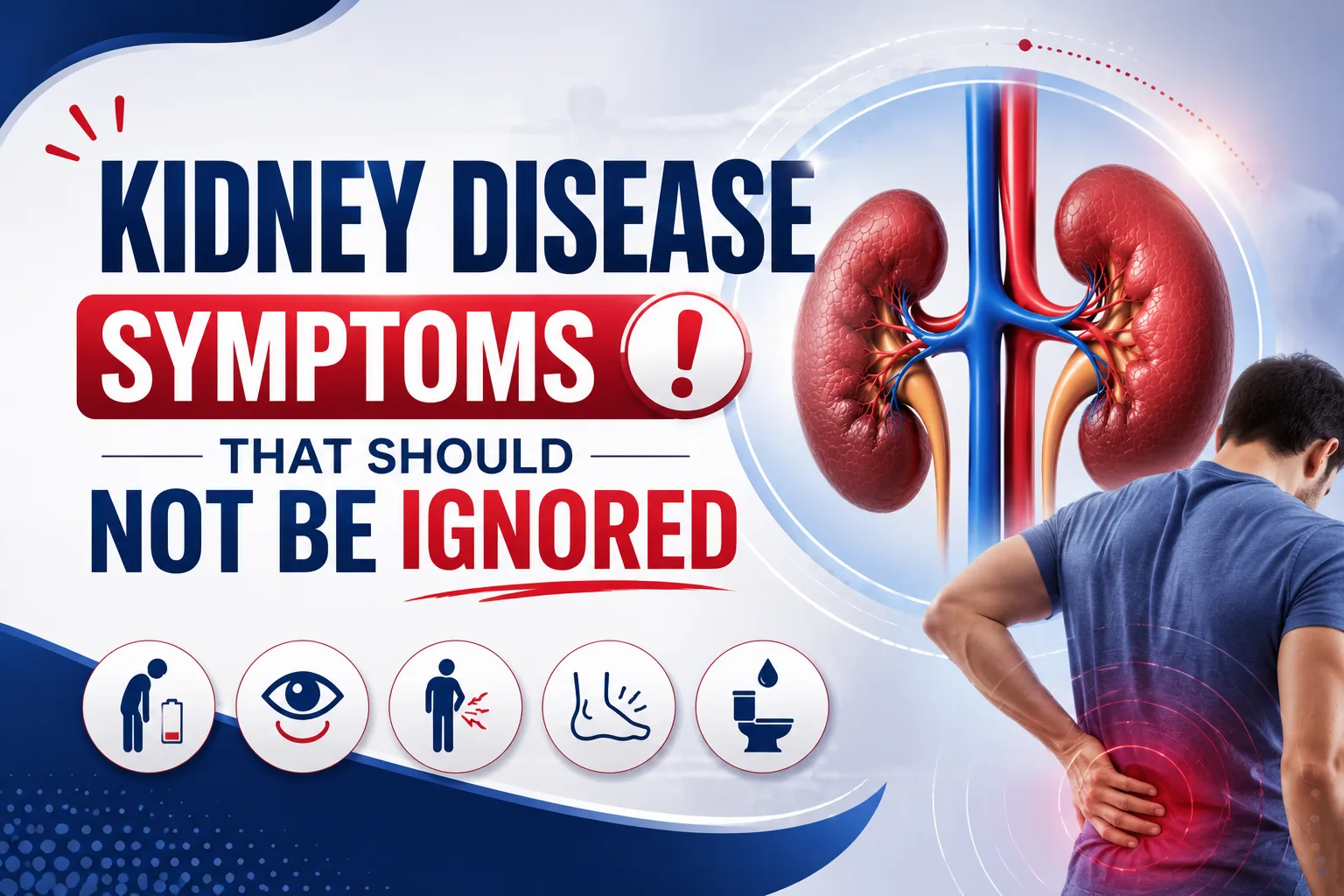
Feeling puffier than usual, wiped out for no reason, or noticing your pee looks like a cappuccino? That could genuinely be a sign of kidney disease, and it's worth paying attention to before your kidneys file a formal complaint. Your kidneys are the two quiet, unglamorous organs that filter your blood 24/7 without ever asking for a raise, so when they start acting up, they don't exactly send a memo; they just... whisper. And most of us are terrible at listening to whispers.
Let's fix that today.
📞 Get a Kidney Health Consultation – Call Now!
Here's the annoying part: kidneys can lose up to 60-70% of their function before you feel anything dramatic. They're basically the coworker who never complains until they suddenly quit. By the time obvious symptoms show up, a good chunk of damage may already be done. That's exactly why doctors keep hammering on "early detection"; because chronic kidney disease (CKD) doesn't announce itself with fireworks, it tiptoes in wearing socks.
According to a large NHANES-based analysis of US adults published in Journal of Public Health, CKD awareness among people who actually have lab-confirmed kidney disease has hovered as low as 4.7% to 9% in several survey years; meaning most people with early kidney damage have absolutely no idea. A more recent NHANES trend study (1999–2020) found awareness barely moved over two decades, staying under 11%. In short: your kidneys could be struggling right now, and you'd be the last to know unless you actively watch for clues.
Think of these as your kidneys' version of passive-aggressive sticky notes:
Fatigue that doesn't budge no matter how much you sleep; healthy kidneys make a hormone called erythropoietin that tells your body to produce red blood cells; when that supply drops, so does your energy.
Swelling in your ankles, feet, hands, or around your eyes; a classic sign your kidneys aren't flushing out excess fluid and sodium properly.
Protein in your urine, often showing up as persistent foamy or bubbly pee (think scrambled egg whites, unfortunately).
Needing to pee more often, especially at night
Itchy, dry skin that no lotion seems to fix
Muscle cramps or weakness
Loss of appetite or a metallic taste that ruins your favorite snacks
Trouble concentrating, sometimes called "brain fog"
Puffiness around the eyes first thing in the morning
Any one of these alone might just mean you binge-watched too much TV or ate salty popcorn. But when a few show up together and stick around, that combination is genuinely an early warning signs of kidney disease pattern doctors take seriously.
📞 Get a Kidney Health Consultation – Call Now!
|
Symptom |
Probably Nothing If... |
Probably Worth a Doctor Visit If... |
|
Swelling |
You ate a truckload of chips last night |
Your ankles look like they belong to someone else, daily |
|
Fatigue |
You stayed up watching one more episode |
You sleep 8 hours and still feel like a phone at 2% |
|
Foamy urine |
It happens once, randomly |
It's foamy every single time, like a cappuccino machine |
|
Frequent urination |
You drank three iced teas |
You're up 4 times a night and haven't changed your habits |
|
Itchy skin |
New detergent, new lotion |
Nothing topical works and it's driving you up the wall |
📞 Get a Kidney Health Consultation – Call Now!
Not everyone carries the same risk. If you have diabetes, high blood pressure, a family history of kidney issues, or you're over 60, you're statistically more likely to develop kidney trouble; a nationwide NHANES trends study covering 1999–2018 found CKD prevalence in early stages climbed from about 9.3% to nearly 13% over those two decades, with diabetes consistently flagged as a major driver. If any of that sounds like you, don't wait for a dramatic sign of kidney disease to show up before getting your blood pressure and kidney function checked.
The good news, and there is good news: catching things early is genuinely one of the best forms of kidney disease help available. A simple blood test (checking creatinine and eGFR) plus a urine test can catch problems long before symptoms pile up. Lifestyle tweaks, cutting back on salt, staying hydrated, managing blood sugar, going easy on painkillers, and moving your body regularly, can meaningfully slow things down, and in early stages sometimes even stabilize kidney function.
If you're already a kidney disease patient, none of this is about panic; it's about staying one step ahead with regular monitoring and steady lifestyle habits rather than waiting for symptoms to escalate.
Kidneys can silently lose significant function before symptoms appear, so don't wait to "feel" something
Watch for the combo of fatigue, swelling, foamy urine, and changes in urination frequency
Protein in your urine is one of the earliest detectable clues, often caught only through testing
People with diabetes, hypertension, or a family history should get screened routinely, not just when symptoms hit
A simple blood and urine test is often all it takes to catch kidney trouble early
Lifestyle changes genuinely help slow progression, even after diagnosis
📞 Get a Kidney Health Consultation – Call Now!
For most people, it's subtle stuff like foamy urine or unexplained tiredness, not anything dramatic.
Early on, yes; that's exactly why so many people brush them off until things progress.
Not always, but if it's persistent and paired with fatigue or changes in urination, it's worth checking out.
In many early cases, yes; with the right treatment, diet, and blood pressure control, damage can be slowed or stabilized.
Usually, through a simple blood test for eGFR and a urine test checking for protein.
Disclaimer: This article is for general informational purposes only and isn't a substitute for professional medical advice, diagnosis, or treatment. If you're experiencing any symptoms mentioned here, please consult a qualified healthcare provider rather than relying solely on this blog.