Aug 14 , 2026
High creatinine usually means your kidneys are working harder than they should, and the reasons range from "you just finished a killer leg day" to "we need to talk to a nephrologist." If you've Googled your lab report at 1 AM in mild panic, welcome; you're in good company, and we're going to unpack this like a friend who happens to know a bit too much about kidneys.
Let's start with the basics before we spiral. Creatinine is a waste product your muscles make when they break down a compound called creatine (yes, the same stuff gym bros scoop into shaker bottles). Your kidneys are supposed to filter it out of your blood and send it packing via urine. When creatinine builds up instead of leaving the party, it usually means your kidneys' filtering rate has slowed down, and that's where creatinine 5 treatment conversations tend to begin.
📩 Ask a Kidney Expert (Free 10-Min Consultation)
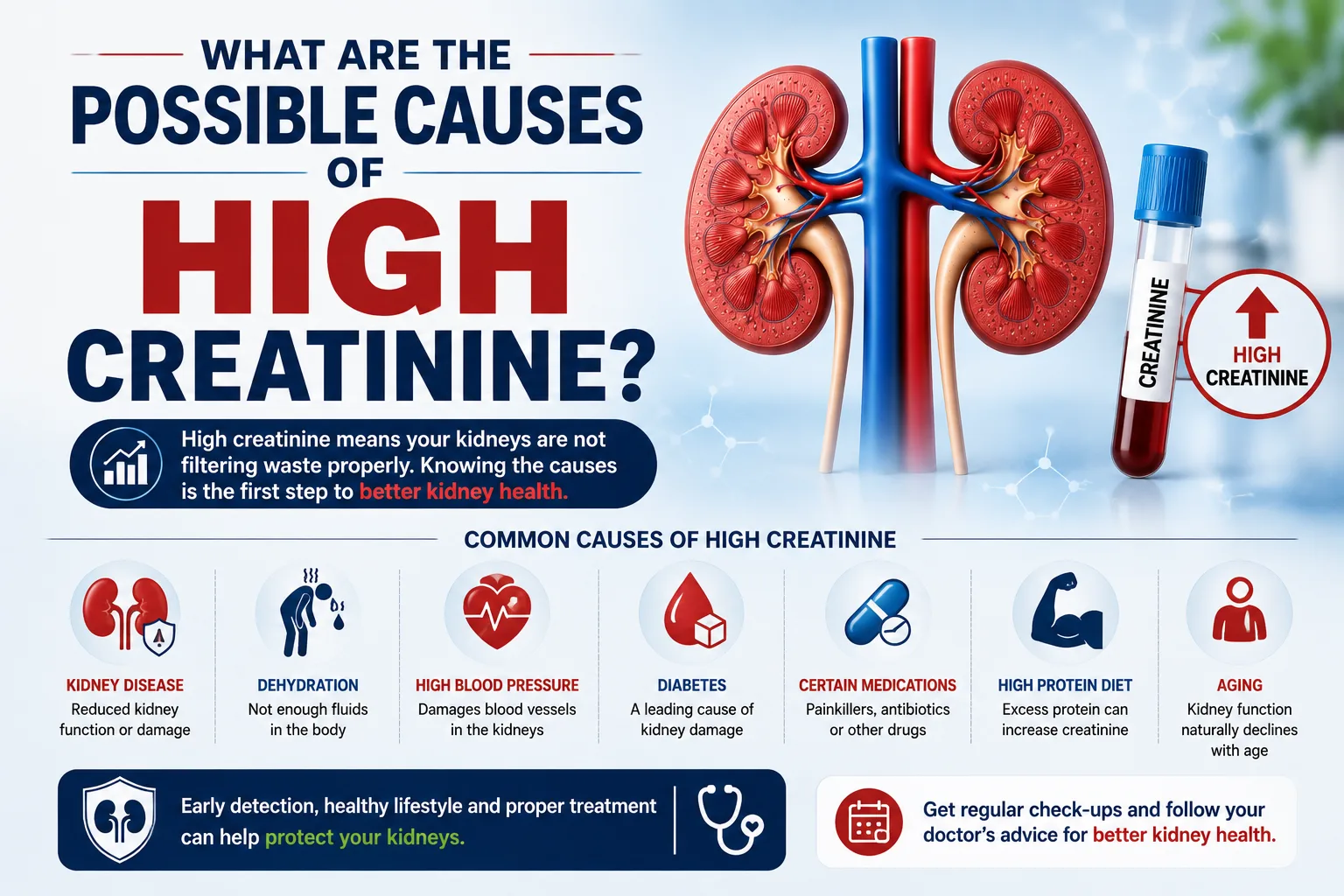
Here's the thing; a single high number doesn't automatically mean disaster. It's more like a smoke detector going off. Sometimes it's burnt toast; sometimes it's an actual fire. Some common culprits:
Dehydration – Less fluid in your system means less blood flow to the kidneys, and creatinine has nowhere to go but up.
High protein diets or intense workouts – More muscle breakdown, more creatinine produced. Bodybuilders, this one's for you.
Certain medications – NSAIDs, some blood pressure meds, and a few antibiotics can nudge kidney filtration down.
Chronic kidney disease (CKD) – The big one. Ongoing kidney damage means less filtering capacity over time.
Urinary tract obstructions – Kidney stones or an enlarged prostate can create a literal traffic jam.
Underlying conditions – Diabetes and high blood pressure are the two most notorious repeat offenders behind poor renal function.
A study on hospitalized COVID-19 patients found that elevated creatinine levels at admission were linked to worse disease progression and higher mortality, even in patients with no prior history of chronic kidney disease; proof that creatinine can spike from acute illness stress, not just long-term kidney damage. Similarly, research from the Chronic Renal Insufficiency Cohort study noted that acute kidney injury has consistently been tied to faster long-term kidney function decline, which is exactly why doctors don't shrug off a one-time spike.
📩 Ask a Kidney Expert (Free 10-Min Consultation)
Short answer: yes, quite a bit. A creatinine of 1.5 and a creatinine of 8 are not the same emergency, and this is where people often get confused searching for a one-size-fits-all fix.
|
Creatinine Level |
What It Might Mean |
Vibe Check |
|
1.3–2 mg/dL |
Mild kidney stress, maybe dehydration or meds |
"Drink some water and chill" |
|
4.2 mg/dL |
Noticeable kidney function drop, needs proper evaluation |
"Okay, let's actually see a doctor" |
|
5 mg/dL |
Significant impairment, close monitoring needed |
"This needs a real plan, not Google" |
|
8+ mg/dL |
Severe kidney impairment, possible dialysis discussion |
"Emergency room, not home remedies" |
If your report shows something like a creatinine 4.2 treatment plan being discussed, your doctor is likely running additional tests, like eGFR and urine protein levels, to see exactly how much filtering capacity is left, since as one study on renal monitoring pointed out, serum creatinine levels are closely tied to glomerular filtration rate and serve as a key marker of kidney function and disease progression.
At the higher end, a creatinine 8 treatment situation is a different beast entirely; this is usually managed under close nephrology supervision, sometimes with dialysis on the table depending on symptoms and other lab values. This is absolutely not a "wait and see" number.
And if you're sitting at that mid-range creatinine 5 treatment territory, doctors usually look at hydration status, medication list, blood pressure control, and whether there's an obstruction causing the backup; because creatinine 5 treatment isn't a single pill, it's a whole strategy tailored to why the number went up in the first place.
📞 Get a Kidney Health Consultation – Call Now!
Please don't self-diagnose off a symptom checker (we know, ironic advice from a blog, but it's true). The smartest move is booking time with a kidney disease doctor who can order the right follow-up tests and figure out the actual root cause. Good kidney care isn't about panicking over one number; it's about understanding the full picture: hydration, diet, blood pressure, blood sugar, and medication history.
High creatinine can be temporary (dehydration, workouts, meds) or a sign of chronic kidney trouble.
The actual number matters a lot; 4.2 and 8 are very different conversations.
Acute spikes can still cause lasting damage if ignored.
Diabetes and high blood pressure are common hidden drivers.
A nephrologist can pinpoint the cause instead of guessing from a lab slip.
📞 Get a Kidney Health Consultation – Call Now!
Yes, it usually signals significant kidney impairment and needs prompt medical evaluation, not a wait-and-watch approach.
Sometimes, yes; especially if dehydration or medication is the cause and it's corrected early.
Cutting back on red meat and staying well hydrated can help, but it should be guided by your doctor's advice.
No, it can also come from dehydration, muscle breakdown, or certain drugs without permanent kidney failure.
As soon as a lab report flags it as elevated, especially if it's above the normal range more than once.
Disclaimer: This blog is for general informational purposes only and isn't a substitute for professional medical advice, diagnosis, or treatment. Creatinine levels and kidney health vary person to person, so always consult a qualified doctor before making any health decisions.