Aug 24 , 2026
Short answer: it's usually diabetes and high blood pressure quietly wrecking the place over years, with a supporting cast of dehydration, infections, and the occasional overzealous painkiller habit. The good news? Most of this is catchable, and kidney function treatment exists for almost every stage of the problem; you just have to notice it's happening first.
Here's the thing about kidneys: they're basically the most polite organs in your body. Your stomach growls at you. Your back screams when you sleep wrong. But your kidneys? They'll be down to 30% capacity and still won't say a word. They just quietly filter less, retain more waste, and hope you figure it out on your own. Rude, honestly, for something so important.
So, let's actually talk about why this happens, because understanding the causes of low kidney function is basically step one of not becoming a statistic in somebody's medical journal.
📞 Get a Kidney Health Consultation – Call Now!
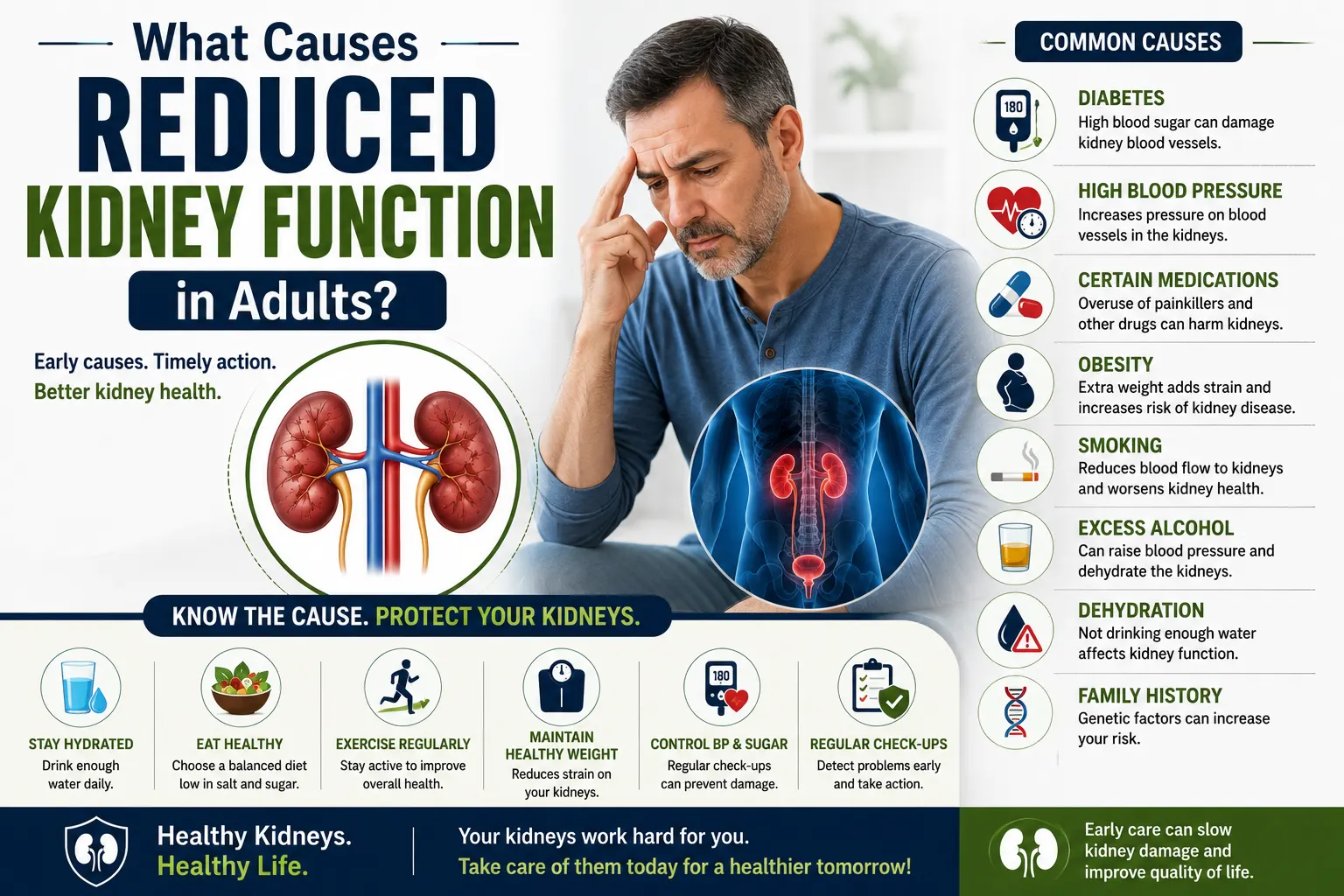
1. Diabetes; the reigning champion of kidney trouble. High blood sugar over long stretches of time damages the tiny filtering units in your kidneys (nephrons, if you want to sound smart at dinner parties). A large population-based analysis using Global Burden of Disease data found that type 2 diabetes and hypertension together are the primary drivers behind the world's rising chronic kidney disease numbers, with global CKD cases crossing 673 million in 2021. That's not a typo. That's basically the population of Europe, all dealing with kidneys that are over it.
2. High blood pressure; diabetes's partner in crime. Elevated blood pressure literally pounds on the blood vessels inside your kidneys until they get stiff and scarred. Research analyzing hospital data in Malaysia found hypertension responsible for roughly a quarter of chronic kidney disease cases, second only to diabetic damage. And a large cohort study published in The Journal of Clinical Hypertension showed that having both diabetes and hypertension together doesn't just add risk; it multiplies it.
3. Chronic dehydration and painkiller overuse: Not glamorous, not dramatic, but real. Years of not drinking enough water plus popping NSAIDs like candy for every headache slowly strains renal function more than people realize.
4. Infections and autoimmune conditions: Recurrent kidney infections, glomerulonephritis, and autoimmune diseases like lupus can inflame and scar kidney tissue over time.
5. Genetics and aging: Sometimes it's just bad luck combined with birthdays. Family history and natural aging reduce kidney reserve even without an obvious "villain" in the story.
|
Cause |
How Sneaky Is It? |
What It's Basically Doing |
|
Diabetes |
Ninja-level sneaky |
Slowly frying the filters |
|
High blood pressure |
Loud but ignored |
Battering the blood vessels |
|
Dehydration |
"I'll drink water tomorrow" energy |
Making kidneys work overtime |
|
Painkiller overuse |
Seems harmless, isn't |
Wearing down tissue quietly |
|
Genetics/Age |
Non-negotiable |
Just... time doing its thing |
📩 Ask a Kidney Expert (Free 10-Min Consultation)
Kidneys don't do dramatic warning signs until fairly late. Fatigue, puffiness, or foamy urine often show up only after significant damage. This is exactly why regular checkups with a kidney disease doctor matter more than people think; blood and urine tests can catch dropping filtration rates long before you feel a thing.
Once caught, kidney function treatment options range from lifestyle changes and blood pressure control to medications that protect the kidneys directly, and in advanced cases, dialysis or transplant. A meta-analysis on type 2 diabetic patients found that managing blood sugar, weight, and blood pressure together significantly lowered CKD progression risk; proof that boring, consistent habits genuinely outperform panic.
Good kidney care isn't about some elaborate detox tea (please, no). It's hydration, blood pressure control, blood sugar management, and not treating ibuprofen like a vitamin.
Diabetes and high blood pressure cause the majority of chronic kidney disease cases worldwide.
Dehydration and painkiller overuse are quiet contributors most people overlook.
Kidneys rarely show early symptoms, so regular testing matters.
Effective kidney function treatment exists at every stage, from lifestyle shifts to medication to dialysis.
Consistent, boring habits (water, blood pressure checks, sugar control) beat dramatic fixes every time, according to Ayurvedic kidney disease treatment.
📞 Get a Kidney Health Consultation – Call Now!
Your kidneys aren't asking for much; just water, decent blood pressure, and not being treated like a painkiller disposal unit. Reduced kidney function usually isn't one big event; it's years of small things piling up quietly. The earlier you notice, the more room there is to protect your renal function and keep things running smoothly for decades to come.
Diabetes is the leading cause worldwide, closely followed by high blood pressure.
Early-stage damage can often be slowed or partially improved, but advanced damage is usually managed rather than reversed.
Blood and urine tests are the most reliable way, since symptoms usually show up only after significant damage.
Yes, staying consistently hydrated reduces the daily workload on your kidneys.
If you have diabetes, high blood pressure, or a family history of kidney disease, annual screening is a smart move even without symptoms.
Disclaimer: This blog is for general informational purposes only and isn't a substitute for professional medical advice, diagnosis, or treatment. Kidney health varies person to person, so please consult a qualified doctor before making any health-related decisions based on this article.