Sep 29 , 2026
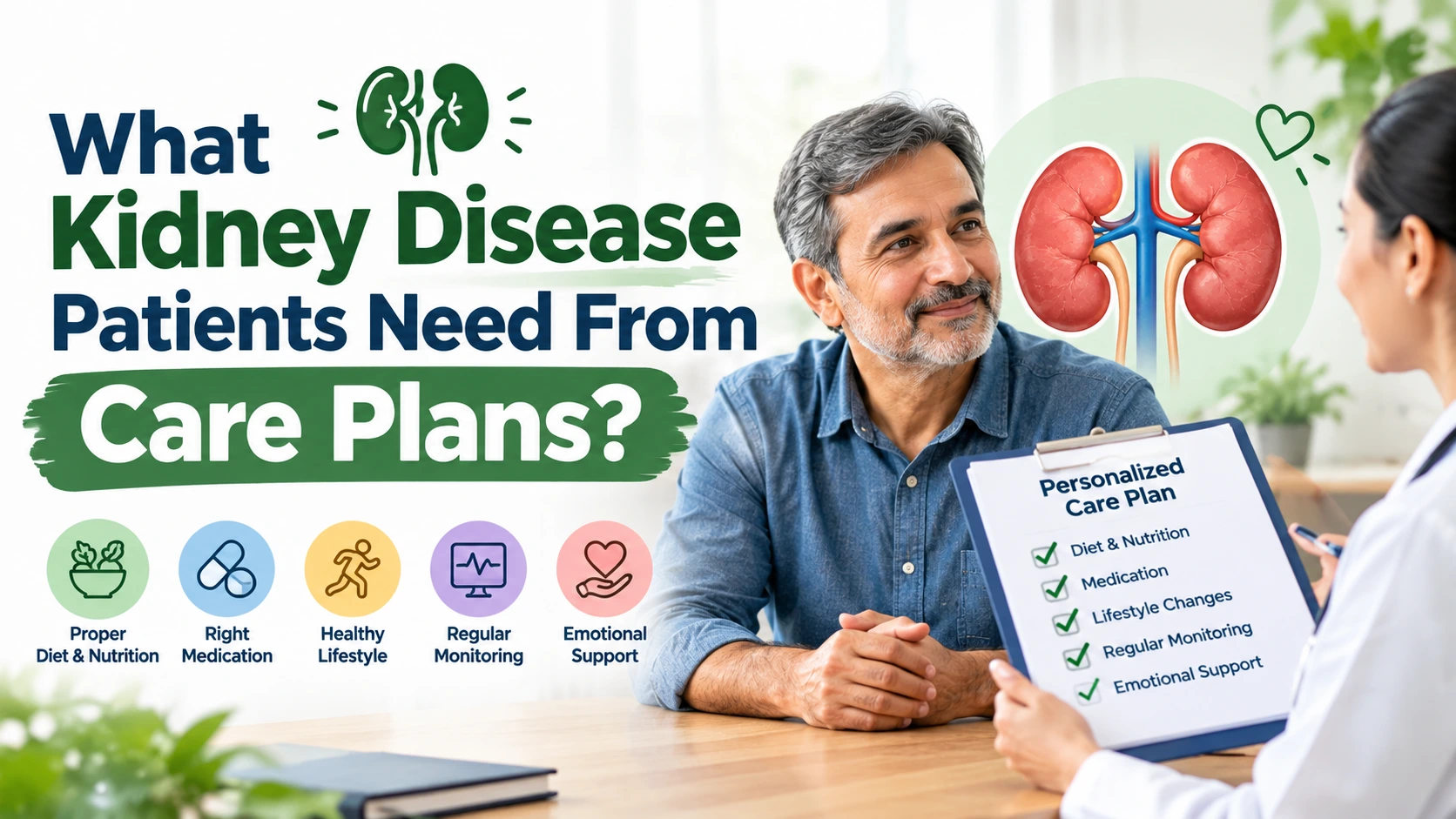
So, what do kidney disease patients actually need from care plans? In short: a plan that treats them like a whole human being, not just a lab report with legs. That's it. That's the tweet. But since you're here for more than a tweet, let's unpack it.
If you've ever sat in a nephrologist's waiting room clutching a folder full of blood test results, you know the drill. Numbers go up, numbers go down, someone hands you a pamphlet about potassium, and you leave feeling like you just failed a pop quiz you didn't study for. Kidney disease is confusing enough without a care plan that reads like it was written by a photocopier having an existential crisis. What Kidney Disease Patients Need From Care Plans is basically a roadmap that makes sense of the chaos; one that's personal, practical, and doesn't assume everyone's life revolves around a spreadsheet of dietary restrictions.
Kidneys are dramatic organs. They don't just quietly retire when they're tired; they take half the body down with them, dragging blood pressure, bones, heart health, and energy levels into the mess. That's why a cookie-cutter approach falls flat. A systematic review published in BMC Nephrology, which looked at 46 qualitative studies involving nearly 1,500 patients, found that the period right after a CKD diagnosis is often marked by uncertainty, social isolation, financial strain, and a general fear of the unknown. That's not a "take two pills and call me in six months" kind of problem. That's a "please see me as a person" kind of problem.
This is exactly where a good kidney support plan earns its keep. It's not just a checklist of dos and don'ts; it's a living document that adjusts as your body, your mood, and your life circumstances shift.
If you're exploring natural kidney treatment as part of your overall approach, it should still fit into a properly monitored care plan. “Natural” doesn't automatically mean appropriate for everyone with kidney disease, and it shouldn't replace necessary testing or medical care.
📩 Ask a Kidney Expert (Free 10-Min Consultation)
Here's what actually needs to be in the mix, minus the jargon:
Research backs up the "flexible and personal" part. A study on personalized nutrition in kidney disease noted that generalized nutrient-restriction guidelines often lead to poor adherence and outcomes, and that tailoring recommendations to a person's biology and lifestyle is gaining ground across chronic disease care, even though it's still catching up in nephrology specifically. Translation: the more your plan feels like it was made for you, the more likely you are to actually stick with it.
|
One-Size-Fits-All Plan |
Personalized Plan |
|
|
Diet advice |
"Avoid bananas forever" |
"Here's what works with your actual meals" |
|
Doctor visits |
Rushed, robotic |
Actual eye contact and questions answered |
|
Mental health |
Not mentioned |
Built in, because stress is real |
|
Adherence |
Low (nobody likes generic homework) |
Higher (because it's realistic) |
|
Vibe |
Filing taxes |
Planning a trip you're actually excited about |
A randomized controlled trial on lifestyle interventions in pre-dialysis CKD patients found that most prior studies had focused narrowly on diet and exercise alone, with few incorporating individual behavioral counseling; the trial itself tested a more rounded, individualized program combining diet, activity, medication guidance, and behavioral support. That "rounded" approach is the whole point. Meanwhile, research on care planning in peritoneal dialysis has pushed for person-centered prescriptions built around shared decision-making rather than a rigid protocol handed down from on high.
None of this works, though, without good kidney care at the center; someone coordinating the moving pieces so you're not left playing telephone between five different specialists.
For people considering the best Ayurvedic herbs for kidneys, the same principle applies: they should be discussed as part of an individualized care plan rather than added randomly. Some herbs and supplements can interact with medicines or may not be suitable when kidney function is reduced.
📩 Ask a Kidney Expert (Free 10-Min Consultation)
Honestly, they need a plan that treats them like a person first and a patient second; personalized, clear, and adjustable as things change.
Ideally every few months, or sooner if symptoms, lab results, or life circumstances shift.
Yes, but it works far better when it's tailored to your actual eating habits instead of a generic restriction list.
Absolutely; a kidney diagnosis affects mood and stress levels just as much as it affects blood work.
It won't reverse damage, but a well-structured, personalized plan can slow decline and improve day-to-day quality of life.
Disclaimer: This blog is for general informational purposes only and isn't a substitute for professional medical advice. Always consult a qualified kidney disease doctor or healthcare provider before making decisions about your treatment, diet, or care plan.