Apr 07 , 2026
As women, we are basically the superheroes of enduring physical discomfort. We’ve survived monthly hormonal rollercoasters, the "fun" of various reproductive exams, and some of us have even pushed human beings out of our bodies like it’s just another Tuesday. So, when we feel a little ache in our side, our first instinct is usually to pop an ibuprofen, grab a heating pad, and keep folding the laundry.
But then there is the kidney stone, and suddenly, understanding what the symptoms of kidney stones are in women becomes very important.
If you’ve never had one, count your lucky stars. If you think you might be having one right now, you aren't just "feeling a bit under the weather." You are hosting a tiny, jagged, crystallized rock that has decided to take a scenic tour of your urinary tract. It is the houseguest that doesn't know when to leave and insists on poking you with a metaphorical fork the entire time it’s there.
Have any renal issues? Fill in the details and get an expert advice.
📞 Get a Kidney Health Consultation – Call Now!
Before we get into the "ouch" factor, let's talk about what these things actually are. Imagine if your urine decided to start a science project. When your pee has too many minerals (like calcium or oxalate) and not enough liquid to water them down, those minerals start holding hands and forming crystals.
Eventually, those crystals grow into stones. They can be as small as a grain of salt or, in absolute horror-movie scenarios, as large as a golf ball. Most of the time, they stay in the kidney and mind their own business. The trouble starts when they decide to migrate, bringing along kidney stones symptoms in females that are hard to ignore.
While the biology of a kidney stone is the same for everyone, kidney stone in females can sometimes feel confusing. Women often experience them a little differently, or at least, we mistake them for a dozen other things first. Here is everything you need to know about spotting these literal "gems" before they make your life a misery.
Have any renal issues? Fill in the details and get an expert advice.
📞 Get a Kidney Health Consultation – Call Now!
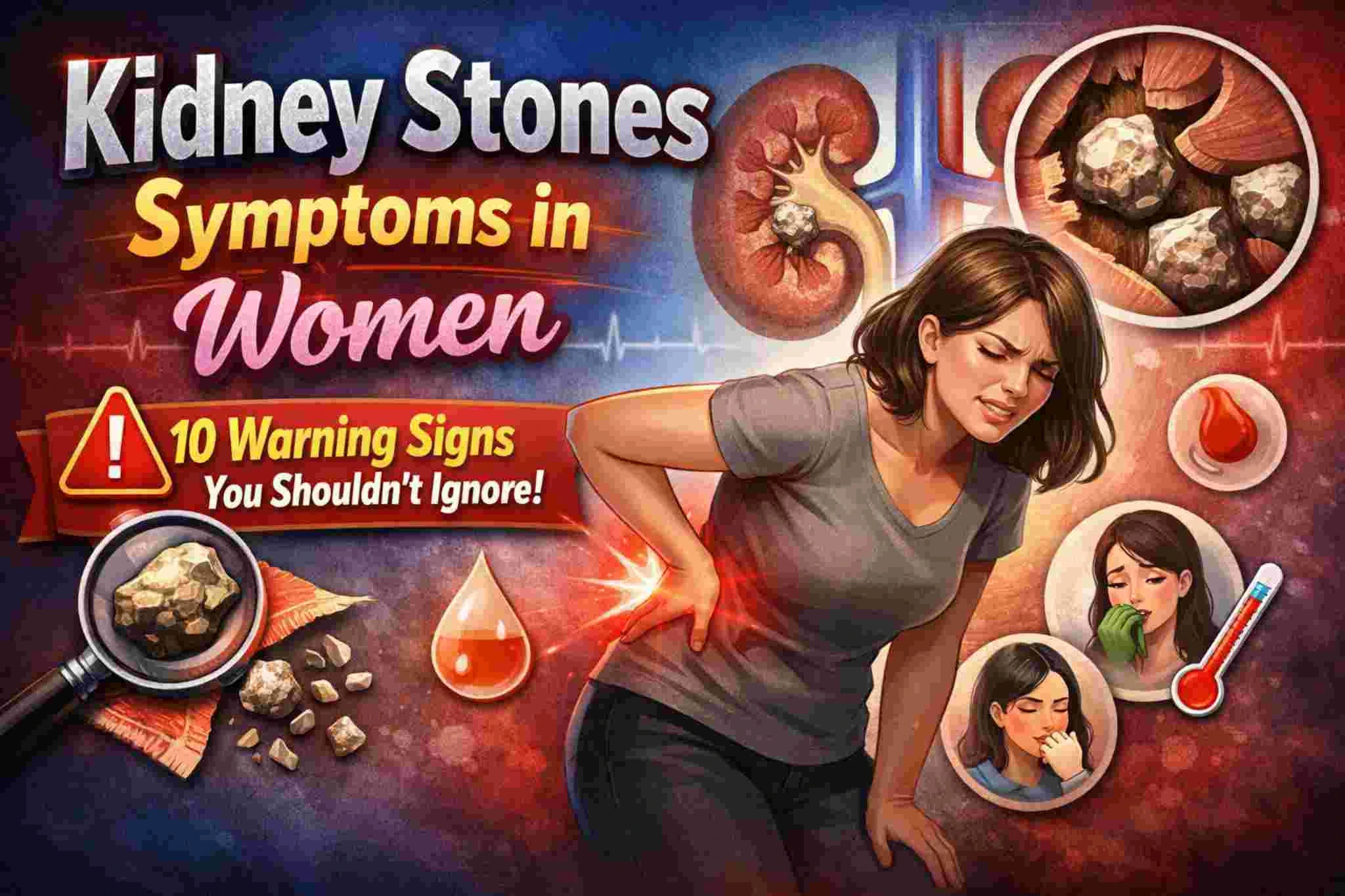
The hallmark of a kidney stone is pain, but it isn't the "I lifted a heavy box" kind of pain. It is often described as renal colic and is one of the most noticeable kidney stone symptoms in women.
For women, this usually starts as a dull ache in the small of their back or on one side of their ribs; commonly mistaken as simple lower back pain in women. However, as the stone moves into the ureter (the narrow tube leading to your bladder), the pain shifts. It’s a sharp, cramping sensation that radiates down toward your lower abdomen and groin.
• The Waves: The pain doesn't usually stay at a constant level. It comes in waves. You’ll feel like you’re dying for ten minutes, and then you’ll feel totally fine for twenty. Don't let the "fine" periods fool you.
• The "Stone Dance": Unlike a back injury, where lying still helps, kidney stone pain makes you restless. You’ll keep changing positions trying to get relief.
These are often among the early signs of kidney stones in females that shouldn’t be ignored.
This is where it gets tricky for women. Because our anatomy is compact, symptoms of kidney stones in women often mimic a urinary tract infection.
If the stone is getting close to your bladder, your body starts to panic. You might feel a persistent, urgent need to pee. You’ll rush to the bathroom only to produce a tiny amount. You might also experience a burning sensation or painful urination, which female patients commonly report. If you’ve had UTIs before, you might assume it’s just another infection. But this is where understanding the difference between UTI and kidney stone symptoms female becomes crucial.
If antibiotics aren't helping and the pain is moving toward your back, chances are it’s a stone.
Have any renal issues? Fill in the details and get an expert advice.
📞 Get a Kidney Health Consultation – Call Now!
We don't usually spend much time inspecting the toilet bowl, but if you suspect a stone, it’s time to start. Kidney stones are jagged and can cause internal scratches, leading to blood in urine, causes like hematuria.
Your pee might look:
• Pinkish or reddish
• Cloudy or murky
• Brownish
You might wonder why your stomach feels upset when the issue is in your kidneys. It’s because of shared nerve pathways. When kidneys are in distress, it can trigger nausea or vomiting; another overlooked part of kidney stones symptoms in female.
If you develop fever, chills, or shivering along with pain, don’t ignore it. These are serious symptoms of kidney stones in women that may indicate infection.
A blocked stone can cause infections, as it leads to the proliferation of bacteria.
Have any renal issues? Fill in the details and get an expert advice.
📞 Get a Kidney Health Consultation – Call Now!
While men used to have more kidney stones, women are catching up. Some common reasons include:
• Dehydration
• High-sodium diet
• Frequent UTIs
These factors increase the chances of developing kidney stones in female symptoms over time.
Since cramps are common, it’s easy to confuse things.
• Period cramps: Lower abdomen, predictable timing
• Kidney stones: One-sided, intense, and often linked with lower back pain in women
• Appendicitis: Lower right-side pain
Recognizing what are kidney stones symptoms in women helps avoid confusion and delays in treatment.
If you are experiencing multiple early signs of kidney stones in females, don’t wait. Visit a doctor ASAP.
The good news? Most stones pass naturally with hydration and care. However, if you experience consistent pain, then consult an expert like Dr. Puneet Dhawan for a completely natural treatment for kidney stones.
Have any renal issues? Fill in the details and get expert advice.
📞 Get a Kidney Health Consultation – Call Now!
Always check out for symptoms, stay hydrated, and don’t ignore any sort of pain that may resemble kidney stone pain. Understanding kidney stone symptoms in women early can save you from pain and hefty hospital bills in the long run.
📞 Get a Kidney Health Consultation – Call Now!
Sharp side/back pain, burning urination, frequent urge to pee, sometimes nausea or blood in urine.
Usually in the lower back/side, and can move to the lower abdomen or groin.
Formation, then growth, then the movement of stones, eventually ending with the passing through urine.