Jul 04 , 2026
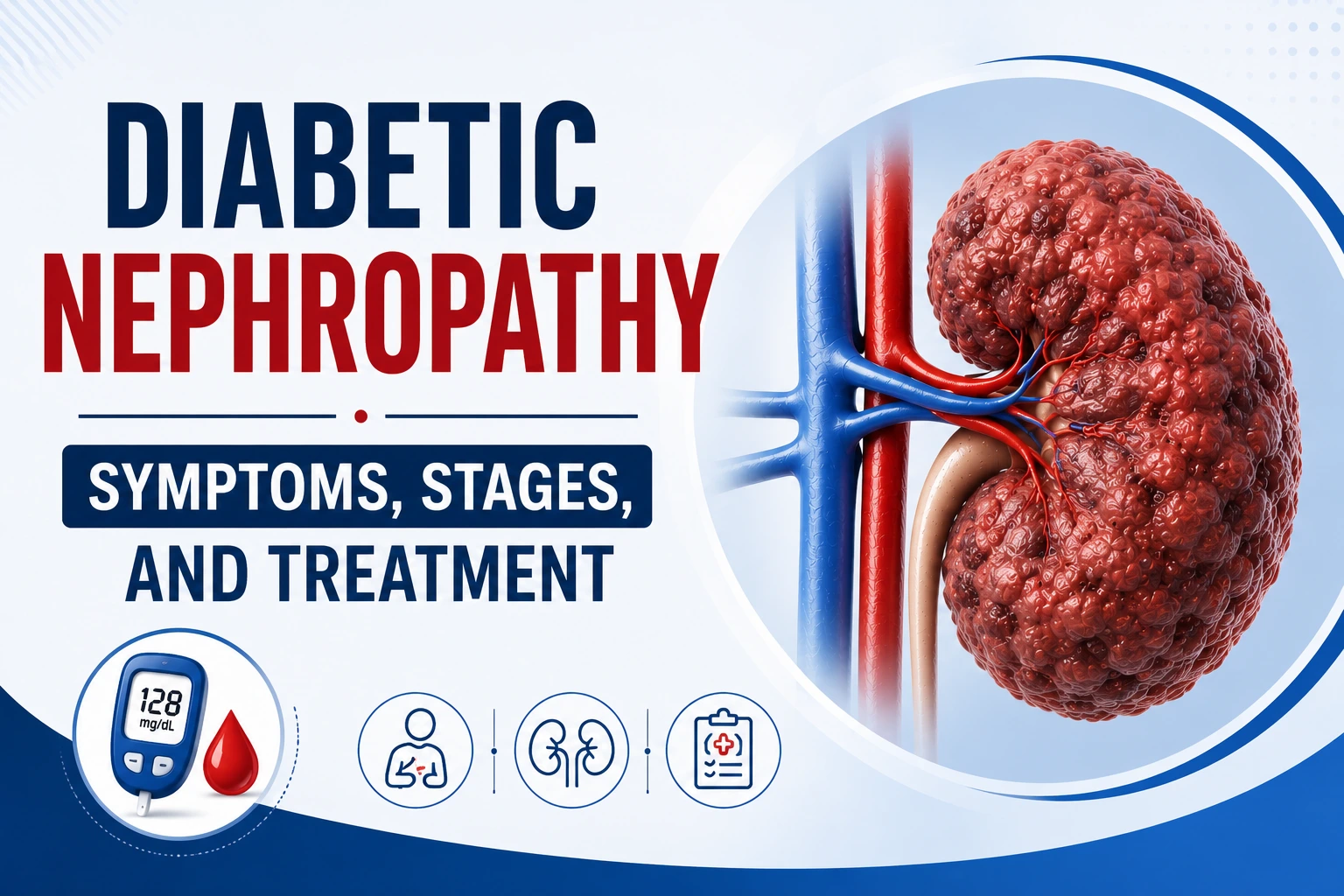
Quick answer first: diabetic nephropathy is kidney damage that happens after years of living with diabetes, and honestly, it's your kidneys finally cracking under pressure they've been quietly absorbing for a long, long time. Nobody wakes up one day with diabetic nephropathy out of nowhere. It builds. Slowly. Like that one drawer in your kitchen that somehow fills up with random batteries and rubber bands over a decade without you ever consciously putting anything in it.
Let's actually talk about this like normal people, not like a pamphlet in a waiting room.
📞 Get a Kidney Health Consultation – Call Now!
Your kidneys are stuffed with millions of tiny filters called nephrons, and inside each one are these delicate little blood vessel clusters doing the unglamorous job of straining waste out of your blood, hour after hour, day after day, for your entire life. They don't get a vacation. They don't get a thank-you card.
Now throw years of high blood sugar at them. The sugar basically roughs up the walls of these tiny filters until they get leaky and worn out, kind of like a screen door that's been used so much the mesh starts tearing. Stuff that should stay in your blood (protein, mainly) starts slipping through where it shouldn't.
This isn't a guess, by the way. The DCCT/EDIC Study, run by the National Institute of Diabetes and Digestive and Kidney Diseases from 1983 to 1993 and tracked for years afterward, found that people who kept tighter control over their blood sugar had a noticeably lower chance of developing kidney problems down the line. So yeah, the sugar-kidney link isn't internet folklore, it's been tracked for decades.
Here's the annoying bit. Early on, your kidneys don't really complain loudly. They just sort of... struggle in silence, like a coworker who says "I'm fine" forty times before quitting unexpectedly. By the time you actually feel something, some damage has usually already happened. Knowing the early diabetic nephropathy symptoms and other diabetic nephropathy symptoms can help you seek medical advice sooner. Still, worth knowing what to look out for:
Swelling around your ankles, feet, hands, or puffiness near your eyes
Foamy or bubbly pee (sounds silly, but it can mean protein's leaking where it shouldn't be)
Being tired in that bone-deep way that sleep doesn't fix
Peeing a lot more, especially waking up at night for it
Not feeling hungry, or a weird metallic taste hanging around in your mouth
Itchy skin with no obvious reason
Trouble focusing, that foggy-headed feeling
Blood pressure is creeping up and getting stubborn about it
The annoying truth is none of these scream "kidney issue" on their own. You could just as easily blame stress, bad sleep, or simply existing as an adult with a job. That's exactly why screening matters more than waiting around to feel something.
📞 Get a Kidney Health Consultation – Call Now!
Diabetic nephropathy stages don't flip a switch overnight; they crawl through stages. Doctors usually track this using two numbers: your eGFR (basically how well your kidneys are filtering) and how much protein is leaking into your urine. Here's the general picture:
|
Stage |
What's Happening |
eGFR Range (Roughly) |
What You Might Actually Feel |
|---|---|---|---|
|
Stage 1 diabetic nephropathy |
Damage starting, but function still normal |
90 or above |
Nothing. Genuinely nothing. |
|
Stage 2 |
Function dips a little |
60 to 89 |
Still mostly quiet |
|
Stage 3 |
A real dip now |
30 to 59 |
Tiredness, some swelling, bathroom habits change |
|
Stage 4 |
Pretty significant decline |
15 to 29 |
Symptoms get harder to ignore, doctors start planning ahead |
|
Stage 5 |
Kidney failure territory |
Below 15 |
Dialysis or a transplant usually comes into the conversation |
Quick disclaimer because tables make things look neater than real life actually is: these are general ranges, not a verdict on your personal situation. Your own doctor, looking at your own labs, is the only one who can really tell you where you stand.
The genuinely good news here is that catching this early doesn't require anything dramatic. Just two simple tests: a urine test checking for albumin (protein that shouldn't be there) and a blood test for your eGFR. That's it. No fancy scans, no scary procedures, just routine bloodwork, most people are already half-used to by now if they've had diabetes for a while.
The UKPDS, or United Kingdom Prospective Diabetes Study, which ran across multiple centers in the UK from 1977 to 1997, found that managing both blood sugar and blood pressure together made a real, measurable dent in diabetes complications, kidney issues included. So, when your doctor nags you about both numbers instead of just one, that's not them being extra. There are decades of data behind that nagging.
📞 Get a Kidney Health Consultation – Call Now!
Let's be upfront about something instead of dancing around it: there's currently no treatment that fully undoes kidney damage once it's happened. That's just where the science is right now. But that doesn't mean it's hopeless, not even close. A lot can be done to slow the slide and protect whatever kidney function you've still got. Diabetic nephropathy treatment focuses on slowing progression and preserving kidney function.
Keeping blood sugar in range. This is still one of the most solid, well-supported ways to slow things down. Nobody's expecting perfection here, just steady, boring consistency over years.
Getting blood pressure under control. High blood pressure speeds up kidney wear and tear, so medications like ACE inhibitors or ARBs often come into play. These don't just lower blood pressure generally, they specifically ease pressure inside the kidney's filtering units, which is kind of the whole point.
SGLT2 inhibitors. Originally made for blood sugar control, this medication class turned out to have kidney-protective effects too, which was a nice surprise for researchers. The CREDENCE Trial, run across multiple countries and published in 2019, found that canagliflozin lowered the risk of kidney failure progressing in people with type 2 diabetes who already had kidney disease. It's now considered an important part of diabetic nephropathy treatment for many eligible patients, though it's definitely a conversation to have with your doctor, not something to self-prescribe off a blog (this one included, obviously).
Tweaking your diet. Cutting back on sodium, and sometimes adjusting protein intake, can take some of the load off your kidneys. Following a balanced diabetic nephropathy diet under the guidance of a dietitian who actually knows your numbers is going to be way more useful than generic internet advice.
Staying on top of checkups. Regular bloodwork and urine tests are how you and your doctor actually know if the current plan is working or needs tweaking. It's unglamorous, but it works. Ongoing monitoring is a key part of diabetic nephropathy treatment.
Later stages. If things progress to Stage 4 or 5, dialysis or transplant conversations enter the picture. Sounds intense written out plainly, sure, but dialysis technology and transplant outcomes have come a long way over the decades, and plenty of people live full, active lives while managing this.
📞 Get a Kidney Health Consultation – Call Now!
Diabetic nephropathy isn't a death sentence, and it's not something to brush off either. It's slow-moving, and slow-moving things actually reward early attention, which is kind of rare and kind of nice when you think about it. If you've got diabetes, regular kidney screening is one of those unglamorous habits that genuinely pays off, even on the days you feel completely fine.
Many people also wonder about diabetic nephropathy life expectancy. The outlook varies widely depending on how early the condition is detected, how well blood sugar and blood pressure are managed, and whether treatment is started before significant kidney damage occurs.
And if you're already dealing with some level of kidney involvement, the research here keeps moving forward. What's available now is noticeably better than what existed fifteen years ago, and that trend doesn't look like it's slowing down.
Disclaimer: This is general information, not a diagnosis, and definitely not a replacement for an actual conversation with your doctor. They know your labs, your history, and your specific situation in a way no article ever could.
📞 Get a Kidney Health Consultation – Call Now!
Keep a tab on blood sugar, control blood pressure, eat a kidney-friendly diet, and follow the treatment plan strictly.
Yes, diabetes can damage the kidneys, which may lead to higher creatinine levels.
A kind of kidney damage caused by long-term high blood sugar.
Yes, if left unmanaged, type 2 diabetes can eventually lead to kidney failure.